Repository navigation
Conversation


Adds a non-persisting design mock of the service-account creation flow to
account and organization settings, so the data model proposed in #491 can be
reviewed before it is built.

The form walks the four decisions from the epic: name, how software signs in
(many per account, GitHub or API key), what it can reach (whole account or
specific products), and which roles it may use. Submitting renders the rows
the creation would write — an `accounts` row, one `identity_bindings` row per
sign-in method, one `memberships` row per grant — plus the environment
variables the workload would then use.

Nothing is saved. `planChanges` is pure and unit-tested; the page is gated on
the same account-management permission that creating a real service account
would require.

Co-Authored-By: Claude Opus 5 <noreply@anthropic.com>
Claude-Session: https://claude.ai/code/session_01HGZ598AJ1F7NWoyPpgepBt

|
The latest updates on your projects. Learn more about Vercel for GitHub.
|




Contributor
|
Claude finished @alukach's task in 1m 45s —— View job Review✅ No blocking issues — safe to merge. This is a pure, client-side design mock with no persistence, no new API routes, and no schema changes, so the blast radius is small. I checked the areas that matter most for a mock like this:
No correctness bugs, security issues, or best-practice violations found in the diff. |

Follow-up to the service-account mock:

- Submitting now lands on a mock detail view of the integration, with an Edit
  button that returns to the form with every answer intact.
- A one-time API key is shown on that page when a key sign-in method was
  chosen, with the "copy it now, it is only shown once" framing.
- The account id is derived from a human-friendly name rather than typed
  directly. Sanitization collapses double hyphens, so a name can never forge a
  second `svc--` prefix.
- API keys may now be issued with no expiry. #491 currently proposes that every
  key must expire, so the mock flags this as a deliberate departure to decide on.
- The GitHub Actions snippet uses aws-actions/configure-aws-credentials rather
  than hand-rolled environment variables, and notes that the action also calls
  GetCallerIdentity, which /.sts does not implement yet.
- Code samples render in a single <pre> with one container background instead
  of per-line inline code.

Co-Authored-By: Claude Opus 5 <noreply@anthropic.com>
Claude-Session: https://claude.ai/code/session_01HGZ598AJ1F7NWoyPpgepBt
Restructures the service-account mock around the flow an admin would
actually use:

- The Service Accounts page is now a list of existing accounts — name and
  derived id, sign-in methods, access, roles, last authenticated, disabled
  state — with a New Service Account button.
- The form moved to /service-accounts/create.
- Each row links to /service-accounts/[name], a detail page whose Edit button
  reopens the form with that account's answers via ?prefill=.
- Editing an existing account exposes a danger zone: disable/enable, and
  delete. Confirming shows the rows the action would touch and, more usefully,
  when access actually stops — deletion does not recall credentials already
  issued, which live out their hour either way.
- Dropped the Owner field and summary row; it is implied by the account whose
  settings you are in. The ownership consequence (org-owned survives a member
  leaving) is kept as a note under the name.

Three fabricated accounts back the list, including one restricted to Read only
and one disabled, so both states are reviewable.

Co-Authored-By: Claude Opus 5 <noreply@anthropic.com>
Claude-Session: https://claude.ai/code/session_01HGZ598AJ1F7NWoyPpgepBt
…dary

The list page passed `detailHref` as a function to a client component, which
Next.js refuses to serialize: "Functions cannot be passed directly to Client
Components". Each row now arrives with its own `href`, resolved on the server
via the existing `serviceAccountUrl` helper, so URL construction stays in
lib/urls rather than being rebuilt in the browser.

Co-Authored-By: Claude Opus 5 <noreply@anthropic.com>
Claude-Session: https://claude.ai/code/session_01HGZ598AJ1F7NWoyPpgepBt
…ails>

Everything a real screen would not show — the rows a submit would write, the
caveats, the "this isn't wired up" disclaimer — now sits inside a collapsed
<details>, so the list, form and detail pages read as the product rather than
as an annotated diagram.

Native <details> rather than a Radix accordion: it opens without JavaScript
and is keyboard- and screen-reader-accessible for free. Each summary line
still says "Design mock" while collapsed, so nothing reads as real at a
glance.

Co-Authored-By: Claude Opus 5 <noreply@anthropic.com>
Claude-Session: https://claude.ai/code/session_01HGZ598AJ1F7NWoyPpgepBt

…rows

A table row forced each account's sign-in methods and product grants into a
single truncated cell ("2 products", "GitHub"), which hid exactly the detail
the mock exists to show. Cards give each account room to list every sign-in
method with its repository and ref, every product grant with its permission,
and its roles — without abbreviating.

Co-Authored-By: Claude Opus 5 <noreply@anthropic.com>
Claude-Session: https://claude.ai/code/session_01HGZ598AJ1F7NWoyPpgepBt
There is no longer a separate page per service account. Each card in the list
carries everything the detail page did: sign-in methods, grants, roles, a
collapsed "How to use this" with the workload config, and the collapsed rows
behind it. The only remaining navigation is Edit, which opens the form
prefilled.

Edit, Disable/Enable and Delete now live in a Manage dropdown in the card's
top right, replacing the standalone danger zone. Confirming still reports the
rows the action would touch and when access actually stops.

Also drops the generated `svc--` id from the UI. It is an implementation
detail of the reserved namespace, not something an operator needs to read; it
remains visible in the collapsed model rows where it is actually relevant.

Co-Authored-By: Claude Opus 5 <noreply@anthropic.com>
Claude-Session: https://claude.ai/code/session_01HGZ598AJ1F7NWoyPpgepBt
The collapsed "rows behind this service account" disclosure sat between the
card's real content and its footer, which put mock scaffolding in the middle
of a screen meant to read as the product. It is now a modal opened from a
Mock Details entry at the bottom of the Manage dropdown, separated from the
real actions.

The dialog scrolls at 80vh, since a service account with several grants and
sign-in methods produces more rows than fit.

Co-Authored-By: Claude Opus 5 <noreply@anthropic.com>
Claude-Session: https://claude.ai/code/session_01HGZ598AJ1F7NWoyPpgepBt
… stdout

The "How to use this" disclosure is now a modal, opened by a Usage example
link on each card, so the card body carries only the account's own facts.

Reworks the API-key snippet on two points:

- The key is stored once in the OS keychain and read from there by the CLI,
  rather than being exported into the environment. The one-time key callout
  now says the same at the moment you'd store it.
- `source-coop token` writes to stdout and the caller redirects it, so the
  path in AWS_WEB_IDENTITY_TOKEN_FILE is the operator's choice. The CLI makes
  no assumption about where the token belongs. The snippet also notes the
  token is short-lived and the SDK re-reads the file, so refreshing it needs
  no restart.

Co-Authored-By: Claude Opus 5 <noreply@anthropic.com>
Claude-Session: https://claude.ai/code/session_01HGZ598AJ1F7NWoyPpgepBt
AWS_ENDPOINT_URL_S3 sits alongside the AWS_ENDPOINT_URL_STS already in the
snippets, so every command in the example inherits the endpoint rather than
each one carrying --endpoint-url. That also removes the line continuation the
YAML example needed.

Renames the placeholder audience from `source-cooperative` to
`source-data-proxy`, matching the convention CI already uses for the GitHub
issuer, and comments what the claim is for — a token minted for anyone else,
real AWS included, is rejected at /.sts.

Co-Authored-By: Claude Opus 5 <noreply@anthropic.com>
Claude-Session: https://claude.ai/code/session_01HGZ598AJ1F7NWoyPpgepBt
A hostname names the intended recipient unambiguously: it cannot collide with
another issuer's tokens, it separates environments for free
(data.staging.source.coop will not be accepted at prod), and it matches the
prevailing convention — AWS uses sts.amazonaws.com.

`source-data-proxy` was an internal codename that meant nothing in a workflow
file and would have needed environment suffixes bolted on, as CI's
source-data-proxy-ci already does.

Drops the explanatory comment above the claim.

Co-Authored-By: Claude Opus 5 <noreply@anthropic.com>
Claude-Session: https://claude.ai/code/session_01HGZ598AJ1F7NWoyPpgepBt

Contributor
Author
|
Some design concepts for the cards: 


Going with option C for now. |
…rection

Applies direction C from the design canvas. A tinted identity band carries
the icon, name, status and controls; the body is a three-column grid with
generous spacing; a hairline footer holds the timestamps.

Everything is expressed in Radix theme variables rather than fixed colors, so
the card follows light and dark mode. Two deliberate departures from stock
Radix, both because the theme sets `radius: "none"`:

- Status is a square dot plus a small-caps word, not a soft Badge — Radix's
  tinted badges read as rounded pills and fight square corners.
- Values a machine reads (repository, ref, product, role) render as plain
  mono text in --code-font-family rather than tinted `Code` chips, which at
  this density turned the card into a field of grey blocks.

Also fixes the bucket in both usage snippets: clients address products
path-style as s3://{account}/{product}/, not the registry's internal
account:product bucket name, which never appears in a client URL.

Co-Authored-By: Claude Opus 5 <noreply@anthropic.com>
Claude-Session: https://claude.ai/code/session_01HGZ598AJ1F7NWoyPpgepBt
The theme runs at `scaling: "110%"`, so every Radix size step is multiplied:
`size="1"` renders at 13.2px where the design calls for 11px, and `size="2"`
at 15.4px. The card came out uniformly inflated — labels competing with
values, and mono details rendering at the same size as the text they belong
under, which is what made it read as congested.

Sets the rendered sizes directly through a TYPE constant (label 11, value
14.5, mono value 13, mono detail 12.5, chip 11, meta 11, action 14), and
spaces the header, body and footer at the design's padding rather than the
nearest scaled step. Adds a gap between a sign-in method's name and its
repository lines so the detail sits under the value instead of running into
it.

Also switches Manage from `soft` to `surface`: on the tinted identity band a
soft button reads as a filled grey block rather than the outlined control the
design uses.

Co-Authored-By: Claude Opus 5 <noreply@anthropic.com>
Claude-Session: https://claude.ai/code/session_01HGZ598AJ1F7NWoyPpgepBt
…line

Usage example drops highContrast on every card, not just disabled ones. At
gray-12 it competed with the account name beside it; the muted grey reads as
the secondary control it is.

A sign-in method now always renders as a value with its attribute beneath —
GitHub over its repository and ref, API key over its expiry — instead of the
key folding its expiry into the value line with an em dash. The expiry keeps
the sans face since it is prose rather than a machine identifier, but shares
the muted colour and size of the mono attributes beside it.

Co-Authored-By: Claude Opus 5 <noreply@anthropic.com>
Claude-Session: https://claude.ai/code/session_01HGZ598AJ1F7NWoyPpgepBt
alukach
added a commit
that referenced
this pull request
Sep 24, 2026

Closes #547. Part of #491. Stacked on #566, now merged, so the diff is this branch alone: the feature commit, the immutable-subject commit, two review-fix commits, a redesign of the form and the list, a fix for writing trusts, owner-namespaced ids, and an account page that is where creating lands and where grants are edited, with the create form's product list, showing what it reaches and granting more from a new row. ## What The real version of the flow #495 mocked, built on the model (#563), the membership pages (#564) and account trusts (#566). Rebuilt on the trust model in one commit; what review changed follows as commits of its own. **Settings → Service Accounts** appears for individuals and organizations alike, to whoever `canManageAccount` says manages the account. The list page loads each service account with its trusts, its grants and (from #570) its keys. **`ServiceAccountForm`** — who it is (the name, and the id derived from it, shown as code with an Edit link the way the data-connection form shows its id), how software signs in (any number of GitHub workflows, each a card with the repository on its own row — `owner/repo`, or `owner@id/repo@id` for the immutable subjects GitHub mints for repositories created after July 2026 or opted in — then a Ref/Environment segmented control and its value, and the exact subject shown as you type), what it may reach (the products it reaches, each with Read / Read and write and a red X, and **Grant a product**, which adds a row with a dropdown of the owner's other products (each option the product's name over its `owner/product` path in small monospace), a Read / Read and write choice, and a green check that finalizes it, beside an X that cancels — the same `ProductAccessList` on the create form and the account's page; each title opens the product in a new tab, and the form holds its grants until it is submitted). **The id is namespaced under the owner:** `{owner}--{id}`, such as `acme--nightly-sync`, joined by the `--` account-owned data connections already use. Two owners can each have a `nightly-sync`, a service account never takes a handle a person or organization might want (their ids cannot contain `--`), and no service-account id can equal an Ory identity id, which is a UUID. The form asks for the short id and shows the whole one; the action composes it. `ServiceAccountSchema` requires the composed form, and a membership's member id accepts it, which granting a namespaced service account a product needs. The general `createAccount` action no longer takes `type=service`: nothing posted it, and it created service accounts without the owner checks or the namespace. Submitting writes the account, its grants and its trusts, and redirects to the account's page, where each trusted workflow's example usage is a click away. Nothing has to run first, and the step carries nothing that expires. **`ServiceAccountList`** — one row per account in the data connections' own `ConnectionList`/`ConnectionRow`: the name linking to the account's page, its id, a marker when it is disabled, and how many workflows it trusts and products it reaches. **`ServiceAccountDetail`**, at `/edit/account/{owner}/service-accounts/{id}` — the account's page: the workflows it trusts as rows, each removed with a red X (captioned "Remove" on hover, labelled with the subject for screen readers), each with an **Example usage** link that opens the step the workflow adds in a modal, and the "Trust a GitHub workflow" dialog on the section header, which writes the trust and closes onto the new row; the products it reaches, each with Read / Read and write and a red X, and **Grant a product**, which adds a row with a dropdown of the owner's other products (each option the product's name over its `owner/product` path in small monospace), a Read / Read and write choice, and a green check that finalizes it, beside an X that cancels — the same `ProductAccessList` on the create form and the account's page, here **saved as each is made** (the check, a change of access, or an X), shown at once (`useOptimistic`) with the controls held while it saves; each title opens the product in a new tab so a viewer can check what it holds; and Disable and Delete set apart in a danger zone. The page resolves the account through `managedServiceAccount` and 404s unless it is under its own owner. The actions revalidate the list and the page. Delete confirms in an alert dialog whose submit runs the action (a plain button, not `AlertDialog.Action`, which would close the dialog before the action ran) and shows the action's message if it refuses; deleting removes the grants and the account with its trusts, then redirects to the list. The trust dialog's form lives inside `Dialog.Content`, so each open starts fresh. The page passes the data-proxy origin down for the example; without one, no example is offered. **The workflow snippet** (`src/lib/services/github-workflow.ts`) is the `aws-actions/configure-aws-credentials@v6` step pointed at the data proxy — `sts-endpoint`, `audience` = the proxy origin — naming the account in `role-to-assume: arn:aws:iam::<service-account-id>:role/FullAccess`, plus `env` pointing S3 clients at the proxy. From then on any S3 client in the job works, if the account trusts the workflow's subject. **Depends on developmentseed/multistore#126:** the action validates the credentials it exports with `GetCallerIdentity`, which the proxy answers once that lands. **`AccountInfoHoverCard`**, the card an account name opens on hover anywhere in the app, marks a service account with the outlined "Service account" badge the picker and memberships table already use. **What this PR adds to the model:** `canManageServiceAccount(session, account, owner)` — whoever manages the owner manages the service account, answered through `canManageAccount` on the fetched owner, so an admin is included, a disabled owner takes its service accounts out of reach with it (admins aside), and nothing that is not a service account qualifies; a disabled service account is still managed so it can be re-enabled or deleted. `managedServiceAccount(session, id)` in `src/lib/accounts/service-accounts.ts` is the one resolver the lifecycle actions (and, in #570, the key actions) go through: it loads the account and its owner and answers null for anything not managed. And `AccountTrustsTable.create` (schema-validated, conditional, `AlreadyTrustedError`) and `delete`, which were in #566 until review noted nothing there called them. **Server actions** (`src/lib/actions/service-accounts.ts`): `createServiceAccount`, `addGithubTrust`, `removeTrust`, `setServiceAccountDisabled`, `deleteServiceAccount`, and for grants `setProductAccess`. Create loads the owner and requires an enabled individual or organization the caller manages — settled before any of its products are read, so the form can't be used to probe another account's catalogue — deduplicates the workflows and grants it was posted. The rest go through `managedServiceAccount`; `setProductAccess` also applies `serviceAccountGrantProblem` (read or write, the owner's products only), changes the grant the account already has rather than adding a second, touches only the account's own grants, and on none revokes by setting the membership Revoked, as a person's is. No action builds a workflow step: the page does, from the proxy origin. A disabled account takes no new trust, and a repeat is named for what it is. `removeTrust` deletes by the account's own key, so it can never touch another account's. ## Stories On this branch's deploy: - `ServiceAccountForm` › **Default** — https://source-coop-ui-git-feat-service-account-management-radiantearth.vercel.app/?path=/story/features-service-accounts-serviceaccountform--default (submitting redirects in the app; Storybook cannot follow that, so the mocked action just resolves) - `ServiceAccountForm` › **NoProducts** — https://source-coop-ui-git-feat-service-account-management-radiantearth.vercel.app/?path=/story/features-service-accounts-serviceaccountform--no-products - `ServiceAccountList` › **Default**, **Disabled**, **Empty** — https://source-coop-ui-git-feat-service-account-management-radiantearth.vercel.app/?path=/story/features-service-accounts-serviceaccountlist--default - `AccountInfoHoverCard` › **ServiceAccount** — https://source-coop-ui-git-feat-service-account-management-radiantearth.vercel.app/?path=/story/components-accounts-accountinfohovercard--service-account (hover the name) - `ProductAccessList` › **NothingGranted**, **SomeGranted**, **EverythingGranted**, **Saving**, **NoProducts** — https://source-coop-ui-git-feat-service-account-management-radiantearth.vercel.app/?path=/story/features-service-accounts-productaccesslist--some-granted (controlled, so every control works, Grant a product included) - `ServiceAccountDetail` › **Default**, **Disabled**, **Empty** — https://source-coop-ui-git-feat-service-account-management-radiantearth.vercel.app/?path=/story/features-service-accounts-serviceaccountdetail--default ("Example usage" opens the step in a modal; "Grant a product" adds the row to choose a product and its access; an access change shows while the mocked save runs, then springs back, since the mock saves nothing) - `WorkflowSnippet` › **Default**, **ImmutableSubject** — https://source-coop-ui-git-feat-service-account-management-radiantearth.vercel.app/?path=/story/features-service-accounts-workflowsnippet--default - `GithubWorkflowFields` › **Empty**, **ImmutableRepositoryWithRemove** — https://source-coop-ui-git-feat-service-account-management-radiantearth.vercel.app/?path=/story/features-service-accounts-githubworkflowfields--empty (controlled, so the stories hold the workflow in state and the fields can be typed into) The form, the detail and the dialog use `useActionState`, so they are on the smoke test's cannot-render-under-jest list alongside the other action-state forms; `WorkflowSnippet`, `GithubWorkflowFields` and `ProductAccessList` render there. The stories and the Storybook mock build the step with `githubWorkflowStep` rather than carrying a copy of it. ## Screenshots The create form: the id derived from the name, one workflow card, and each product's access chosen in place: 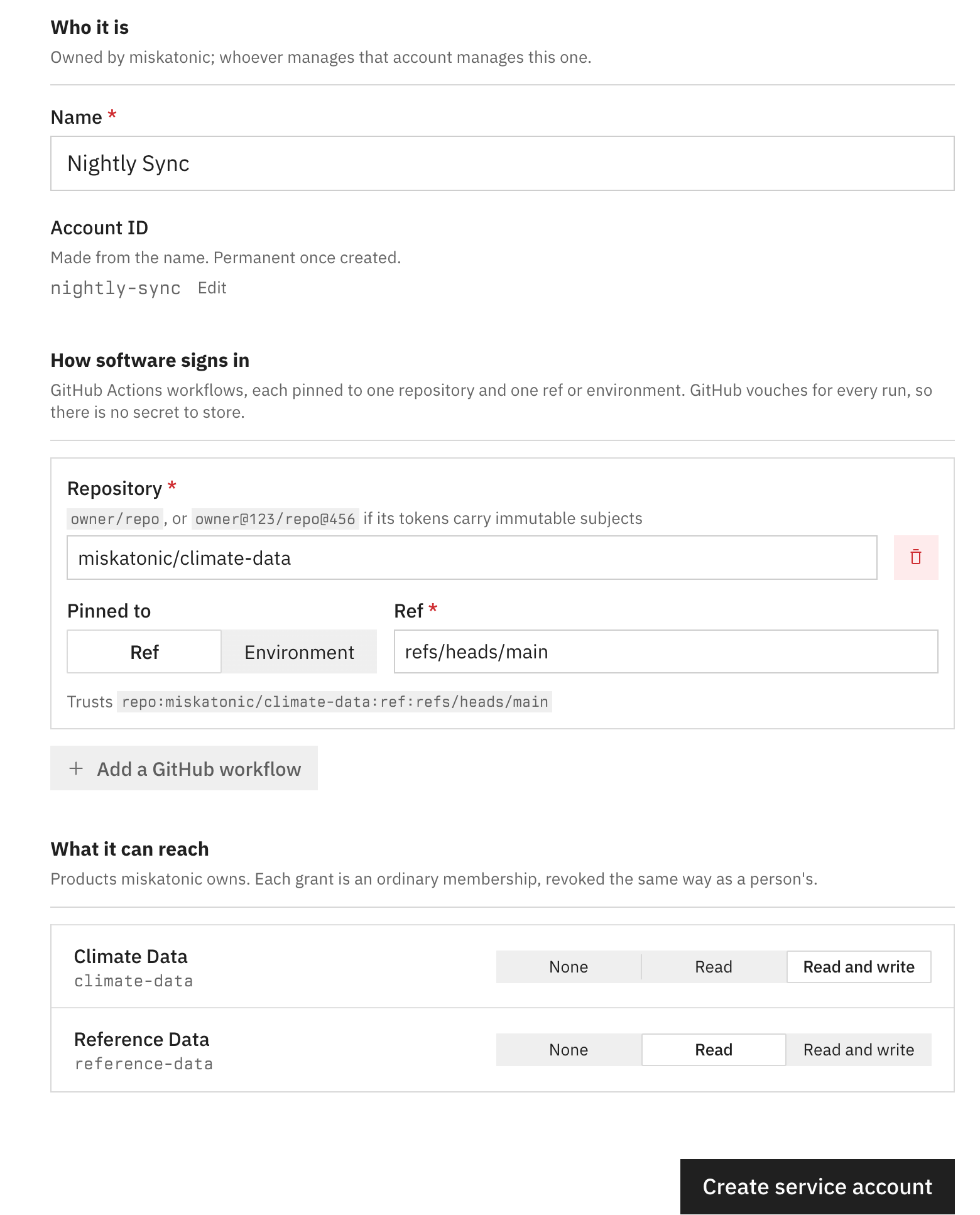 The list, one row per account: 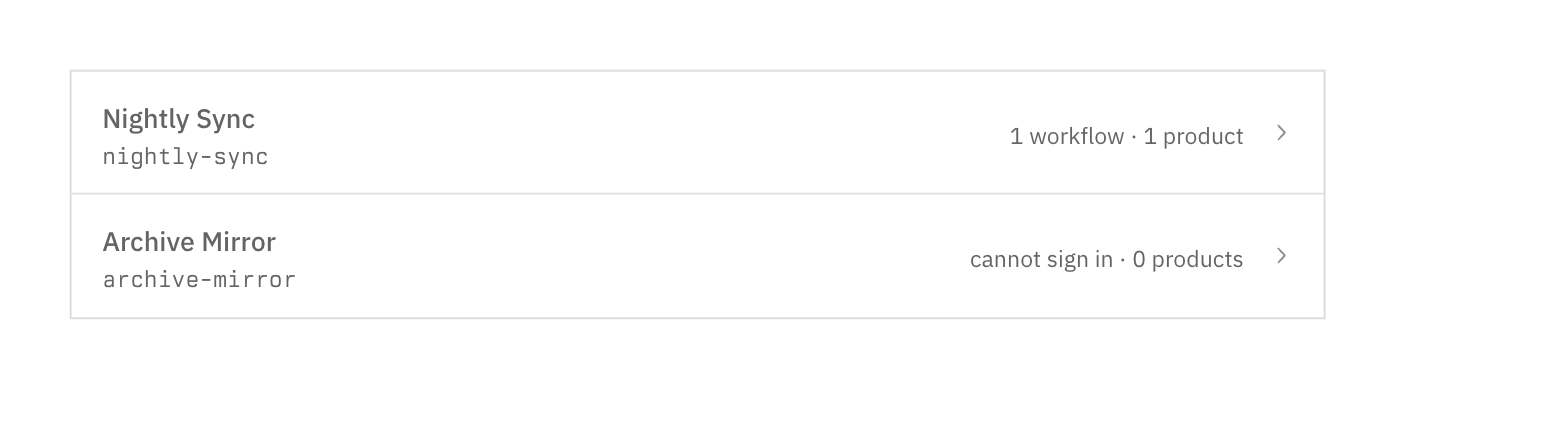 The id, derived from the name under the owner, and the same id opened for editing: 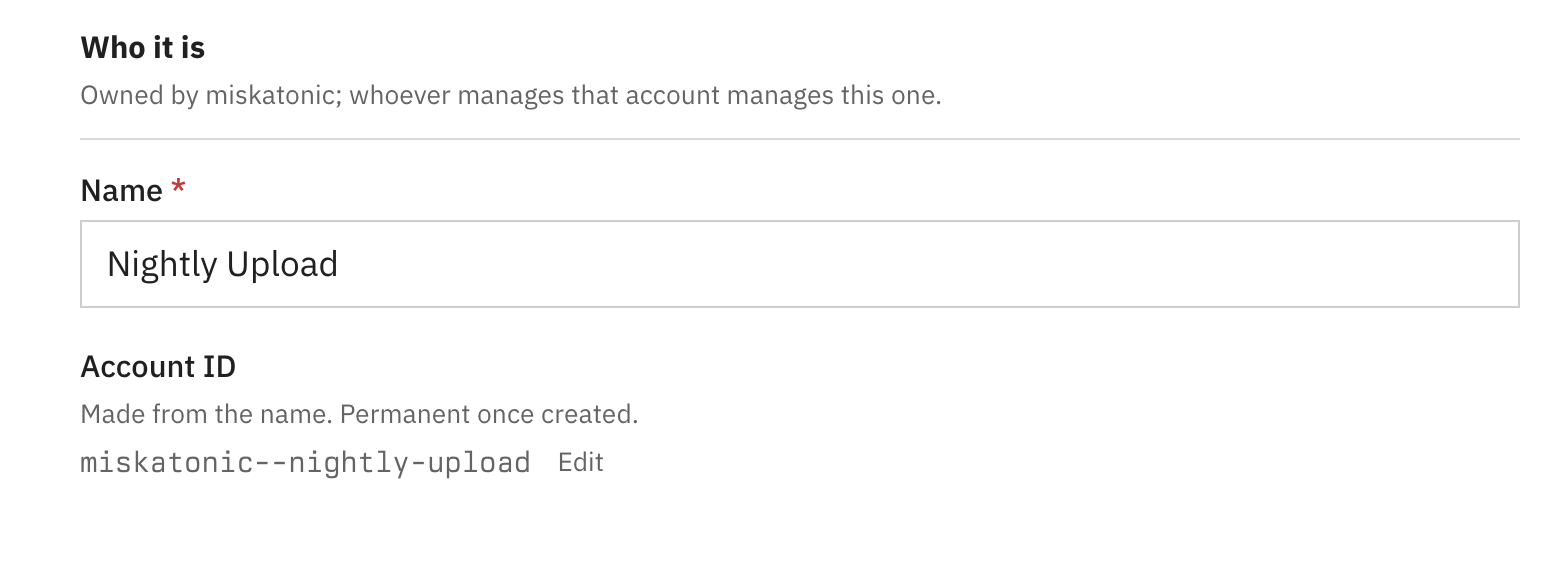 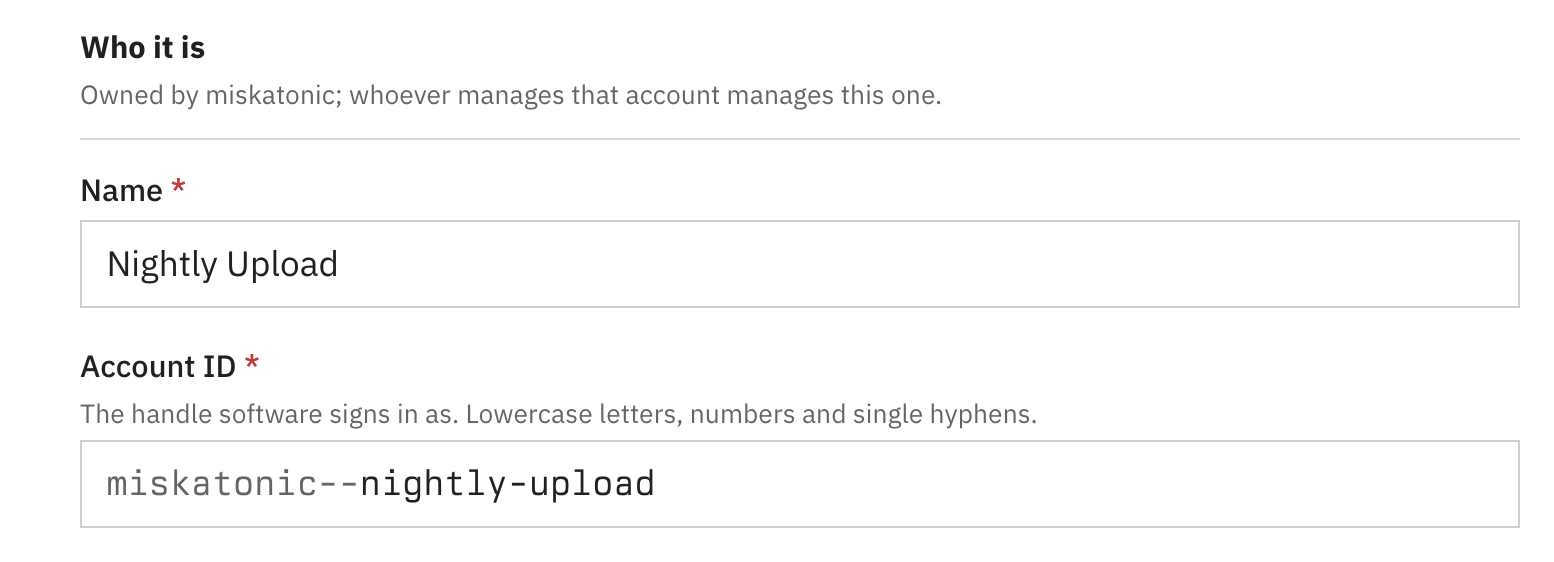 An account's page, where creating one lands. Each trusted workflow has Example usage; the products it reaches are listed with their access and an X, with Grant a product below: 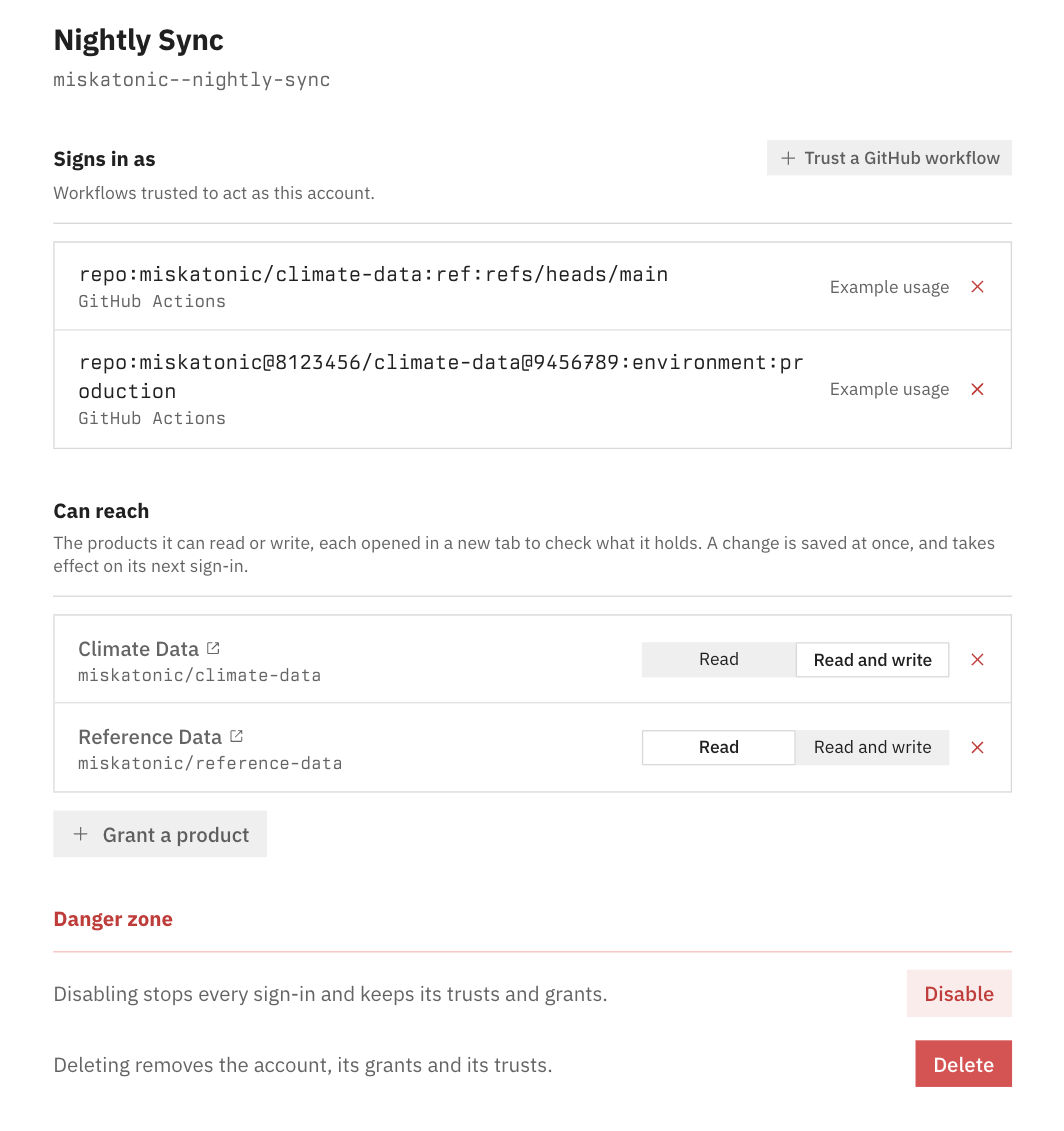 After Grant a product: a row to choose the product and its access, finalized with the check: 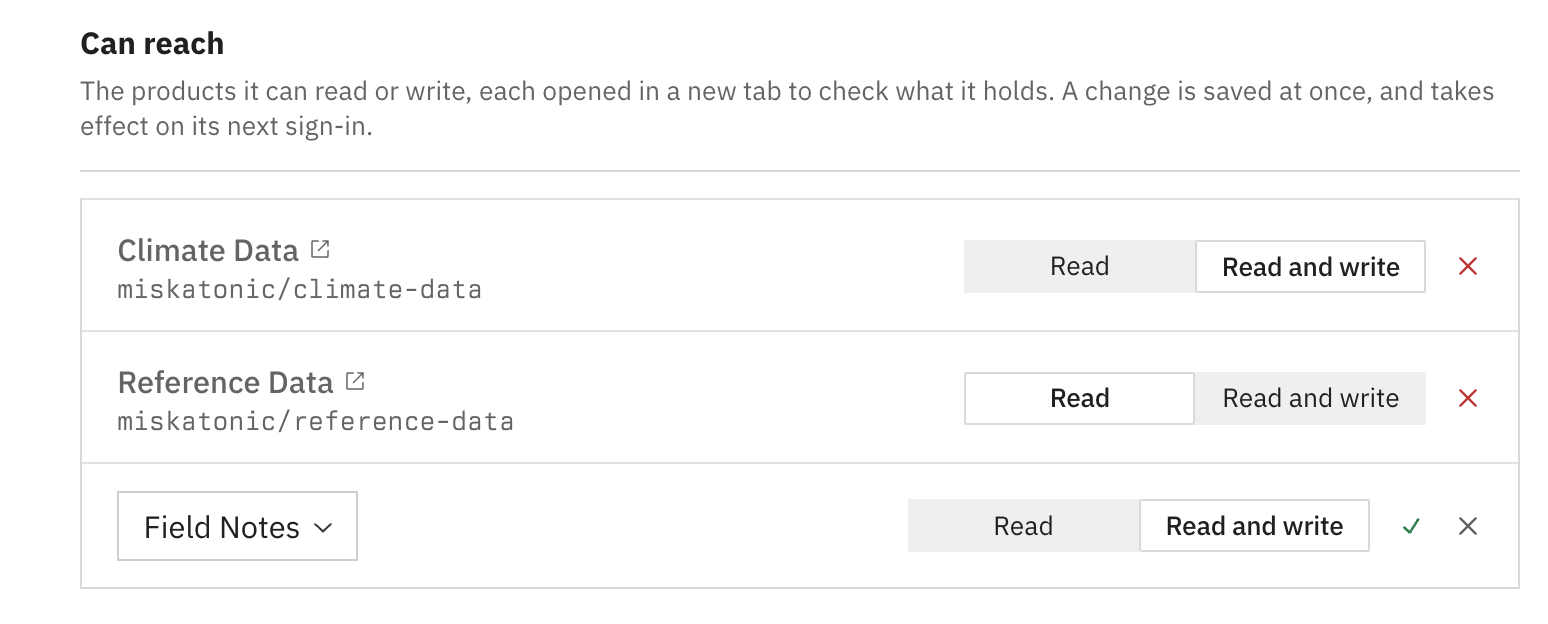 A trust row, with the Remove caption showing on the X: 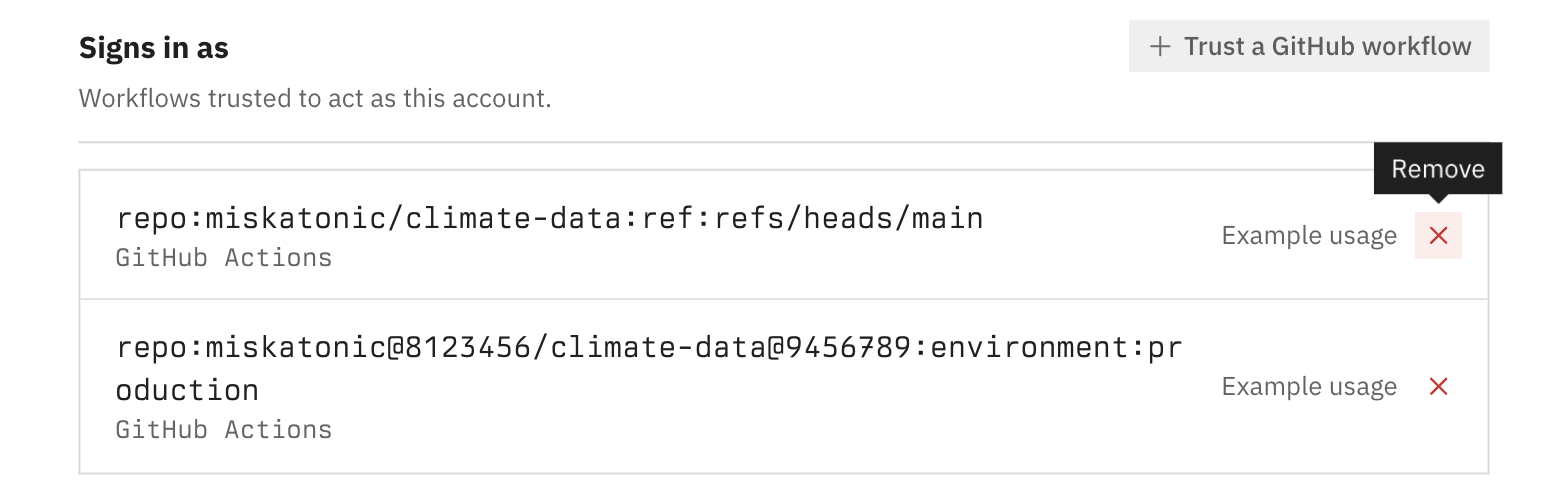 The grant row's dropdown, each product's name over its path: 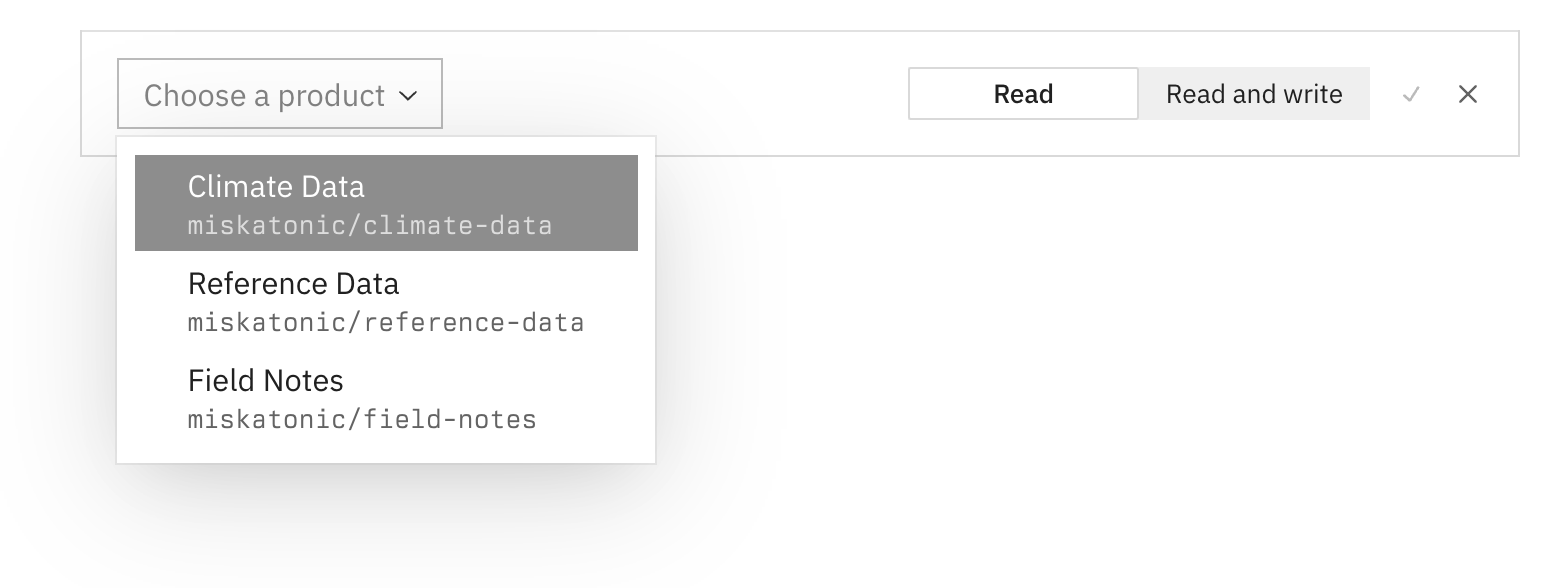 The create form uses the same list and grant row, and holds its grants until it is submitted. Example usage, opened from a workflow's row: 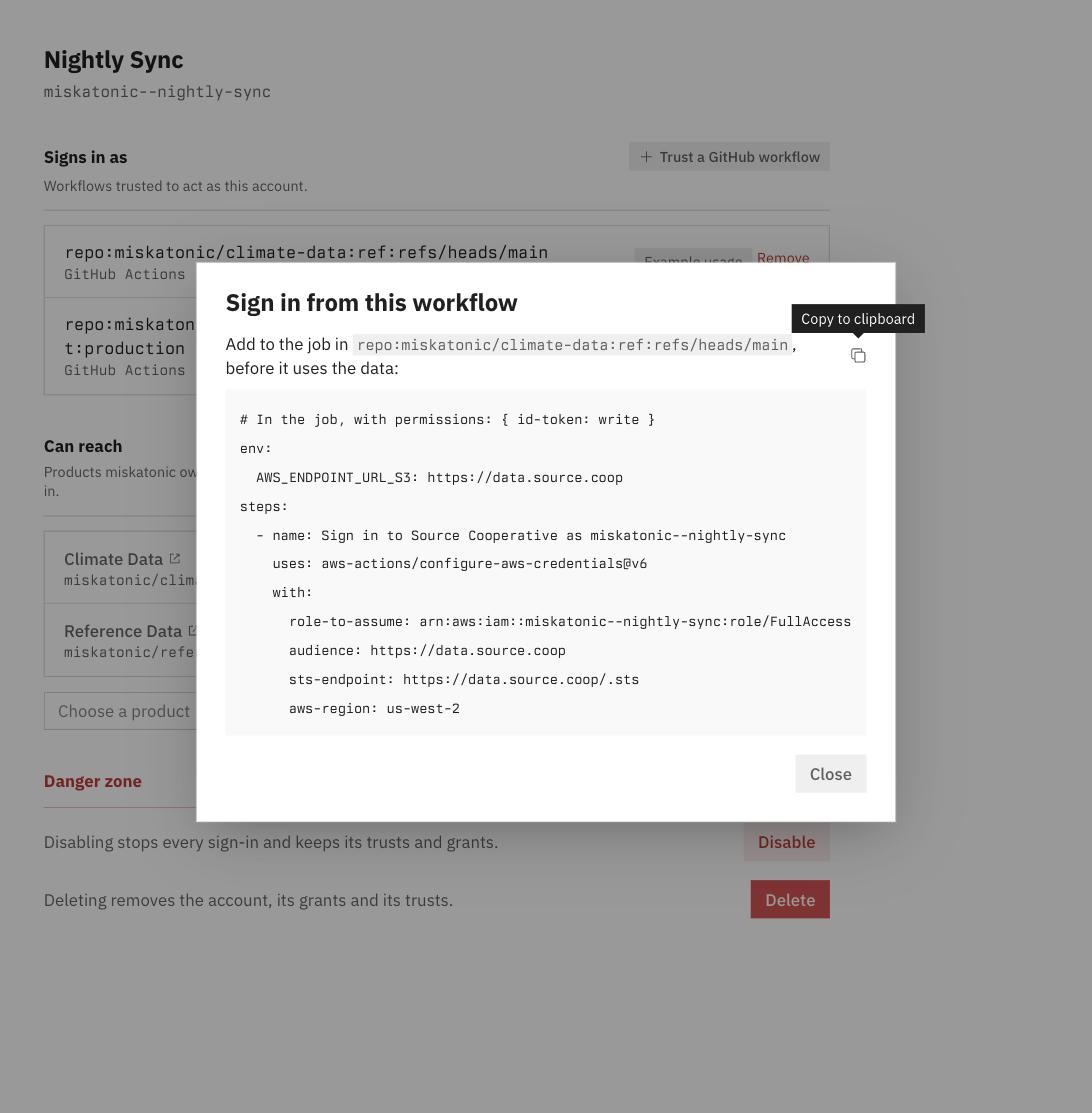 `WorkflowSnippet` on its own, with a subject in the immutable form pinned to an environment — the block scrolls sideways rather than wrapping the YAML: 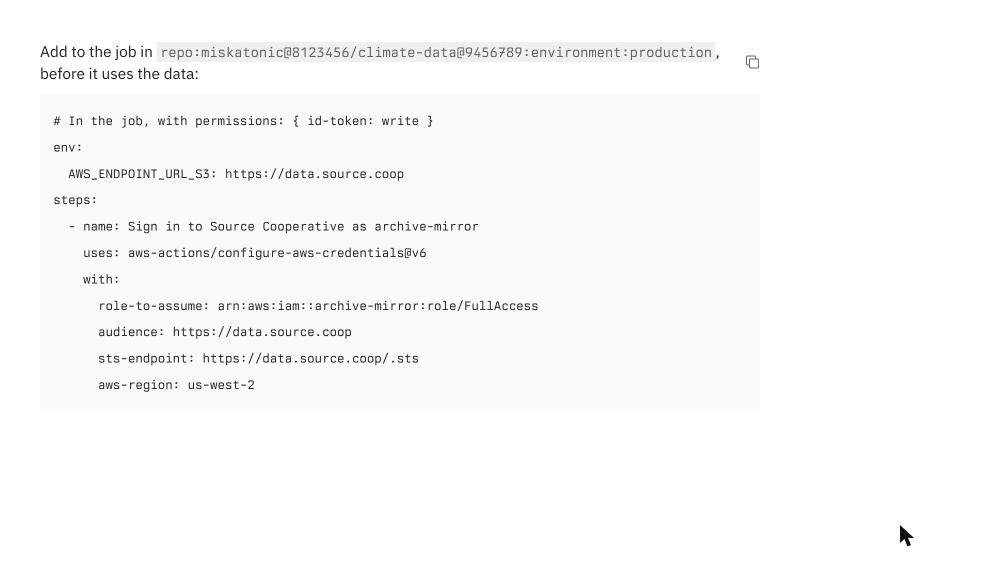 `GithubWorkflowFields` as the create form stacks it, an immutable repository name pinned to an environment, with the Remove button: 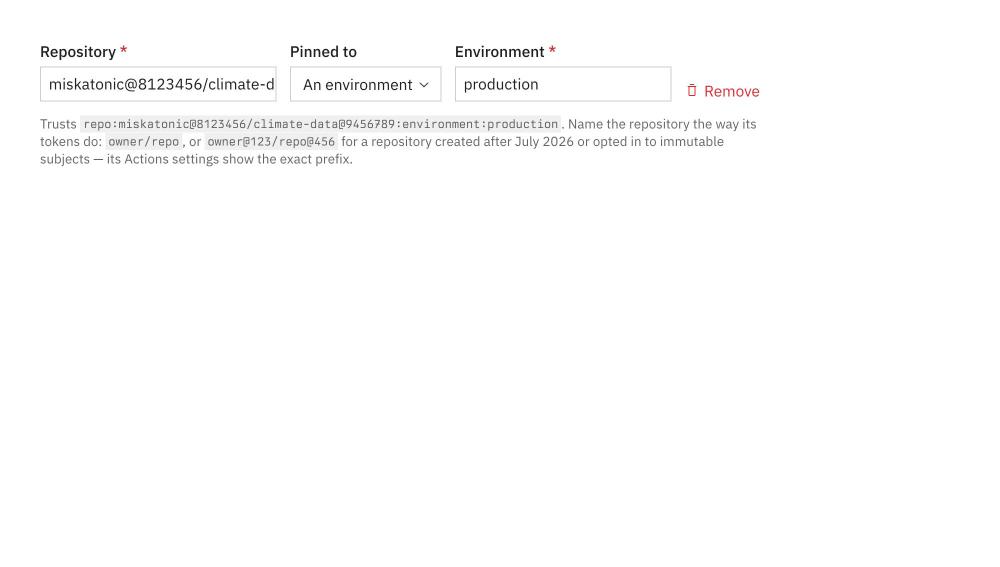 A service account's hover card: 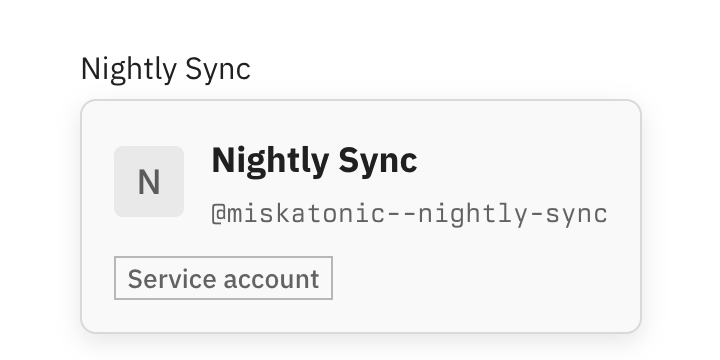 ## Testing - `npx jest` — all suites pass, re-run after the redesign. `service-accounts.test.ts`: create writes the account, grants and trusts once each however many times a field was posted, and redirects to the account's page; refuses an unpinned workflow, a product the owner lacks and a bad role before writing; refuses a non-manager, a missing owner and a service-account owner, and reports a taken id on the short-id field; delete removes grants then the account and redirects to the list; a short id containing its own `--` is refused; disable/enable; remove a trust by the account's key; trust one more workflow, refusing an unpinned subject, a repeat and a disabled account; every lifecycle action refuses what `managedServiceAccount` does not hand back. `accounts/service-accounts.test.ts`: the resolver hands back the account only when it is a service account whose owner is found and managed. `github-workflow.test.ts`: the step names the account and the proxy and carries nothing that expires. - `authz.test.ts`: the manager rules — admin-over-organization refused, some other account offered as the owner refused, a disabled owner refused for its managers and allowed for an admin. `account-trusts.test.ts`: write keyed by account and identity, only once; `AlreadyTrustedError`; malformed rows refused before the table; delete by the same key. - `service-accounts.test.ts`, `setProductAccess`: a product the account does not reach is granted as a member of the owner; one it reaches has its grant changed rather than a second added, and none revokes it (and is a no-op where there is no grant); a product the owner lacks, a role beyond read or write, and a non-manager are refused before any write; only the account's own grants are read. - `account-trusts.test.ts` also asserts the create condition names `identity` by placeholder. Unit tests mock DynamoDB, so they could not catch the reserved word; it surfaced when a trust write failed on a deployment with "Attribute name is a reserved keyword; reserved keyword: identity". - `npm run type-check`, `next lint`, `npm run build-storybook` — clean. ## Docs and ADRs data.source.coop: ADR-014 (source-cooperative/data.source.coop#232) describes this flow as amended with #566, and is amended again for the namespaced id (commit ae85ff72 on that PR), which replaces its "no reserved id namespace". docs.source.coop: the unattended-workflow guide (source-cooperative/docs.source.coop#34) will carry the workflow step this issues; it should read the way the AWS one does. 🤖 Generated with [Claude Code](https://claude.com/claude-code) https://claude.ai/code/session_01REZWKgQy2PDETn6j9YpM4z --------- Co-authored-by: Claude Fable 5.1 <noreply@anthropic.com>












Contributor
Author
|
Overtaken by #567 |
This branch was successfully deployed
This file contains hidden or bidirectional Unicode text that may be interpreted or compiled differently than what appears below. To review, open the file in an editor that reveals hidden Unicode characters.
Learn more about bidirectional Unicode characters
Sign up for free
to join this conversation on GitHub.
Already have an account?
Sign in to comment
1 participant

Add this suggestion to a batch that can be applied as a single commit.This suggestion is invalid because no changes were made to the code.Suggestions cannot be applied while the pull request is closed.Suggestions cannot be applied while viewing a subset of changes.Only one suggestion per line can be applied in a batch.Add this suggestion to a batch that can be applied as a single commit.Applying suggestions on deleted lines is not supported.You must change the existing code in this line in order to create a valid suggestion.Outdated suggestions cannot be applied.This suggestion has been applied or marked resolved.Suggestions cannot be applied from pending reviews.Suggestions cannot be applied on multi-line comments.Suggestions cannot be applied while the pull request is queued to merge.Suggestion cannot be applied right now. Please check back later.
What this is
A non-persisting design mock of the service-account creation flow proposed in #491, so the data model can be reviewed in a browser before we build it.
Nothing is saved. Submitting the form renders the database rows the creation would write.
Where to find it
Settings → Service Accounts, on both individual and organization accounts (either can own a service account). Visible to anyone who can manage the account.
What it demonstrates
The four decisions from the epic, in order:
svc--<sanitized>. Sanitization collapses double hyphens, so a name can never forge a second reserved prefix (ID_REGEXforbids--in human account ids, which is what makes the prefix collision-proof).Submitting lands on a mock detail view of the integration — the page a real create would redirect to — with an Edit button that returns to the form with every answer intact. If a key sign-in method was chosen, the detail view shows the one-time API key with copy-now framing.
The detail view shows:
accounts(existing table) — the newservicerow withowner_account_idandallowed_rolesidentity_bindings(new table) — one row per sign-in method, all pointing at the same principalmemberships(existing table) — one row per grant; account-wide access collapses to a single row with norepository_id, which is already howhasRolereads itaws-actions/configure-aws-credentials@v4, or the CLI + env-var form for keys. The role in both changes if Full access is unticked.Plus the caveats worth seeing next to the model: what doesn't exist yet, that roles only subtract, and that revoking a grant stops new access in ~60s while issued credentials last up to an hour.
Notes for review
plan.tsis pure and holds all the model logic;plan.test.tscovers it (14 tests) — namespacing, the GitHubsubclaim shape, per-product vs account-wide membership rows, one binding per sign-in method, and the validation rules including the empty-role-set case that would leave an account unable to authenticate at all.PutAccountProfile, notListAccountMemberships— the latter returnstruefor any signed-in user (authz.ts:1242-1252), which would have exposed the mock on other people's accounts.Two things the mock deliberately surfaces for decision
aws-actions/configure-aws-credentialsalso callsGetCallerIdentity, which/.stsdoes not implement. Since that action is how most people will first try this, the mock shows it and flags the gap.Not included
Key issuance, revocation, the
deletepermission question, and custom roles. This is the create flow only.🤖 Generated with Claude Code
https://claude.ai/code/session_01HGZ598AJ1F7NWoyPpgepBt