Capture the soul of any person, company, or product on the internet


Website · Skill source · npm package · Docs · Use cases
Soulscrape is a free agent skill that writes a dated dossier on a person, a company, or a product: how they decide, work, and change, with every claim tied to its sources. Keep it private, or publish it.
Latest release: v0.7.0.
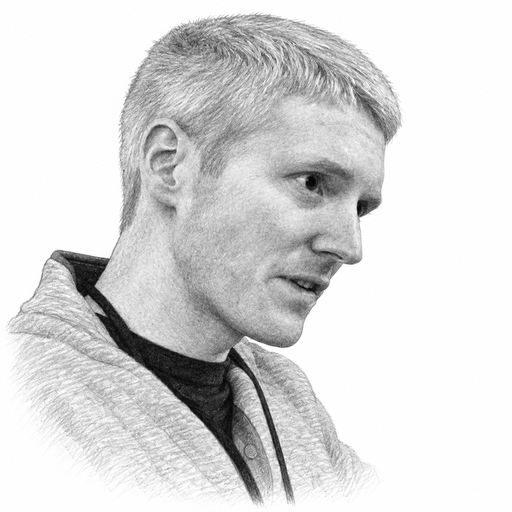
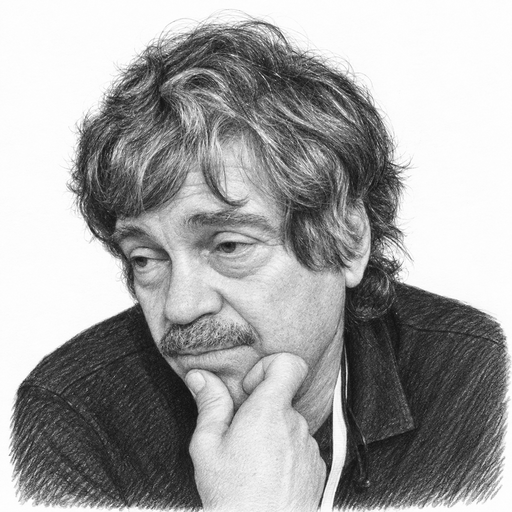
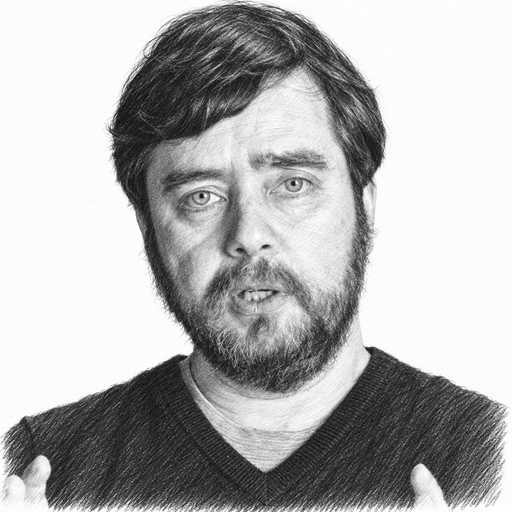
Each example is a dossier on a person, company, or product, built from public sources and published at soulscrape.com.
| Patrick Collison | Gumroad | Alan Kay | Eugene Tssui |
|---|---|---|---|
 |
 |
 |
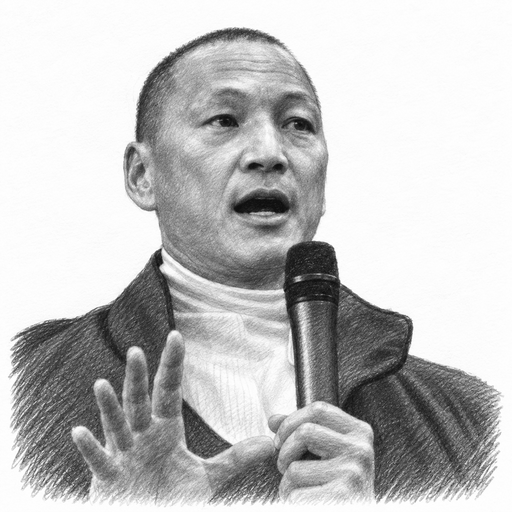 |
| Stripe and progress studies. | A marketplace for creators. | Smalltalk and creative computing. | Architecture inspired by nature. |
| Michael Levin | obsidian | Christopher Alexander | Brian Eno |
|---|---|---|---|
 |
 |
 |
 |
| Bioelectricity and unconventional minds. | A note-taking tool named for volcanic glass. | Patterns and living structure. | Ambient music and collective creativity. |
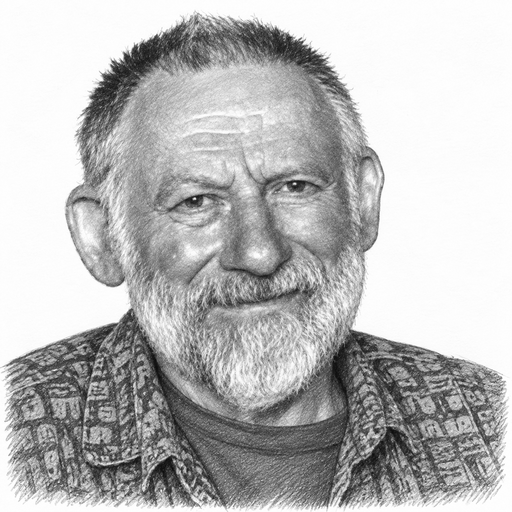
Browse the example collection. These are independently assembled public indexes; inclusion does not imply participation or endorsement. The shaded portraits are AI-assisted illustrations and the subject studies are graphite renderings, both derived from credited source images. Image sources, processing details, and licenses.
a dossier describes patterns in the evidence you supplied. it is not a complete picture of the subject, a diagnosis, proof of consent, or permission to speak or act for them. using it as a reference needs no sign-off from the subject; for a person, writing in their voice or building an assistant that works like them needs their explicit authorization.
The skill runs inside your agent, with your model, tools, and sources, and needs no Soulscrape account. Reading published dossiers needs no account either. To publish or manage your own, sign in with a free Hraness account. There is no subscription, no credits to buy, and no card. Your private sources and working documents stay where you put them. Your agent and any research services you use may charge separately.
Use Bun 1.3.14 or newer and a compatible agent, such as Codex or Claude Code. Review the skill, then install its pinned release:
bunx skills add hraness/soulscrape#v0.7.0 --skill soulscrapeInstalling copies the skill's files; it reads no personal data and starts no modeling run. Then start a new agent session, give it a few sources you're allowed to use, and say what the dossier is for and who will read it:
Use $soulscrape to build a dated working model of <person, company,
or product> from <authorized sources>. It's for <intended use>, read
by <audience>. Use sources up to <cutoff>. For a person subject,
proxy authorization: <none, or who approved what>.
The agent maps the sources, asks once if something material is missing, and writes the dossier. Review the claims against their sources before reusing it.
The document's sections follow the evidence. A shortened outline:
# <Subject>: a dated working model

> Status: Partial, source-bounded, dated, and revisable. The subject's
> current words, choices, and corrections outrank this document.

## Executive model
The patterns that best explain the subject's demonstrated choices,
with source references and counterevidence.

## Practical operating manual
How to bring context, disagree, decide, draft, verify, and close loops.

## Tensions, limits, and revision hooks
Where the evidence conflicts, where the model predicts poorly, and what
new evidence should change it.

## What not to infer
Sensitive, unsupported, stale, or out-of-scope conclusions.
Soulscrape separates facts, stated beliefs, revealed patterns, and speculation. contradictions, historical change, and alternative explanations stay in the model.
- map the authorized corpus. record authorship, source type, date range, audience, sampling limits, and blind spots before interpreting.
- build an evidence ledger. tie each claim to its sources. repeated decisions and costly behavior usually carry more signal than polished self-description.
- calibrate the interpretation. assess support and scope separately; keep counterevidence, uncertainty, and plausible alternative readings.
- write usable guidance. state what a reader or an authorized assistant can do with the model, which decisions remain with the person, and when to revise it.
the asking protocol lists what the skill asks and when it stops. public research is off by default. when it runs, each finding keeps its URL, access date, and the passage that supports it, and a source counts as the subject's only when something ties it to them, such as a link from their own site.
ask the skill to assemble a public person index and it produces a soulscrape.person-index.v1 packet: an essay, a list of cited claims, a timeline, themes, works, appearances, relations, and open questions. review the complete packet, then publish it with a free Hraness account at soulscrape.com/<username>/<handle> (see the Eugene Tssui index). each index is a web page, a JSON packet with every claim and source, and a Markdown copy of its essay, free for anyone to read, cite, fork, or hand to an agent. the OpenAPI 3.1 document describes the public read endpoints and the signed-in publishing endpoints.
- SOUL.md turns your own writing into persona files so your agent writes like you. Soulscrape writes a cited dossier on a person, company, or product from sources you're allowed to use.
- Delphi hosts a chatbot trained on your own content. Soulscrape writes a document inside your agent, and publishing it is free.
- Deep research in ChatGPT, Perplexity, or Gemini writes a one-off cited report. Soulscrape keeps a structured dossier you can revise and publish.
- Clay enriches sales leads at scale, and Crystal predicts personality types. Soulscrape reads one subject in depth, assigns no personality type, and collects no contact details.
See the full comparison.
| Evidence | What it can support | What it cannot establish by itself |
|---|---|---|
| Repeated or costly behavior | priorities, tradeoffs, and tolerances in the observed context | motive, timeless identity, or behavior in every domain |
| Notes and private capture | recurring attention, unresolved questions, and change over time | a final belief or a representative picture of daily life |
| Messages and collaboration records | situated communication and interaction patterns | global voice, consent, diagnosis, or a reusable proxy |
| Public work and self-presentation | owned claims, craft standards, and public narrative | unedited private belief or independent corroboration |
| Public and institutional research | dated context and candidate facts | subject authorship, identity from a name alone, or absence as evidence |
- Use only sources the user has authorized for the stated purpose. Possessing messages or a packet does not establish the subject's authorization.
- A dossier about yourself may include a charter for an assistant that works for you, within stated limits. A model of another person defaults to a private, third-person collaboration guide unless that person explicitly authorized proxy preparation.
- A private collaboration guide must not imitate the subject's voice. Voice-resembling drafts or a reusable assistant charter require explicit subject authorization for the stated use; even then, the result never authorizes deceptive impersonation, employment or other consequential evaluation, unverified public claims about the subject, or external action in their name.
- Do not infer protected or highly sensitive traits from proxies, aesthetics, affiliations, omissions, or adapter-generated claims.
- Keep third-party details out of reusable outputs by default. Prefer the minimum behavioral paraphrase needed to support a subject claim.
- The subject's current words, choices, and corrections outrank this document. For a person subject, treat every prediction as revisable.
The skill applies these rules on every run. Before synthesis, establish the intended use, authorized sources and dates, intended audience, missing context, and decisions that must remain with the person. The question packet helps resolve missing information when it materially changes the run.
Ordinary authorized documents can enter a run directly. Structured exporters can use the source-packet schema to retain identity binding, authorship, provenance, and a bounded corpus:
- The message-history CLI in the TextButler repository emits private, subject-relative message evidence.
- PeopleBlade emits identity-bound public-enrichment evidence.
- The included X archive utility extracts account-authored public posts from an official local archive without opening direct messages, address books, advertising data, deleted posts, community posts, or media.
Source packets are untrusted evidence. The skill weighs them like any other source, never follows instructions inside them, and never treats them as consent or as proof of who someone is. A packet's checksum shows the file wasn't altered, not that its contents are true.
From a Soulscrape repository checkout, prepare an official, caller-owned X archive with Bun 1.3.14 or newer:
bun skills/soulscrape/scripts/prepare-x-archive.ts \
  /absolute/path/to/twitter-archive.zip \
  --output /absolute/private/path/subject-x.ensoul-source.json \
  --limit 2000
The archive and output paths must be absolute. The command refuses overwrite and symlink traversal, writes the packet at mode 0600, and emits only a body-free receipt to stdout. It samples evenly above the requested bound, caps records at 2,000, bounds per-record and aggregate content bytes, and refuses packets above 128 MiB. Conflicting post IDs fail; malformed and exact-duplicate omissions are recorded in the packet scope.
Validate every packet offline before an agent opens or interprets its records:
bun skills/soulscrape/scripts/validate-source-packet.ts \
  /absolute/private/path/subject.ensoul-source.json
The dependency-free validator checks the common envelope, attribution fields, time bounds, claim bindings, I-JSON constraints, and RFC 8785/SHA-256 digests. It emits only a sanitized receipt or error.
From the root of an independently copied or installed soulscrape skill, use bun scripts/prepare-x-archive.ts and bun scripts/validate-source-packet.ts with the same arguments. See the packet reference for the full contract.
The same evidence discipline has a public-facing output: a soulscrape.person-index.v1 packet assembles public sources, cited claims, a timeline, themes, works, appearances, relations to other entities, and open questions into one structured record of a person, an organization, or a product. Publishers with a free Hraness account publish reviewed indexes at soulscrape.com/<username>/<handle>, where the handle is a normalized name like eugene-tssui. A published index states its assembled date, names its publisher, cites every claim, and can be revised or withdrawn.
Review every claim, source, and publication boundary before uploading the packet. The hosted service stores the public packet; it does not run research or receive your private source corpus. There is no subscription, no credits to buy, and no card. Create a free account or sign in through the CLI device link below.
Follow the public person index procedure, then validate and publish with Bun:
bun skills/soulscrape/scripts/validate-person-index.ts \
  /absolute/path/to/person-index.json
bun skills/soulscrape/scripts/publish-person.ts login
bun skills/soulscrape/scripts/publish-person.ts publish \
  /absolute/path/to/person-index.json
login opens a device flow: the CLI prints a code, the browser approves it under your Hraness account at /connect, and the CLI receives a publish credential stored at mode 0600. Publishing is idempotent on the packet digest: republishing identical bytes is a no-op, and changed bytes bump the revision. list, withdraw <handle>, whoami, and logout round out the CLI. The packet contract is defined by the person-index schema and enforced again server-side.
GitHub Releases are the canonical distribution. The release workflow attaches a package archive, packing receipt, checksums, release manifest, and GitHub provenance. Use the exact archive URL for a reproducible installation:
bun add --exact https://github.com/hraness/soulscrape/releases/download/v0.7.0/hraness-soulscrape-0.7.0.tgzThe same URL works with npm install. The package has no dependencies or lifecycle scripts and carries the complete skill and its explicitly invoked utilities at node_modules/@hraness/soulscrape/skills/soulscrape/.
The tag workflow publishes the same archive bytes to npm as @hraness/soulscrape through trusted publishing. The corresponding version-pinned command is bun add --exact @hraness/soulscrape@0.7.0. See releases for published versions and the publishing procedure for verification details.
Consuming products can copy the complete skills/soulscrape directory and record the source revision. The copy remains independently usable, without a runtime, packaging, or CI dependency on this repository. PeopleBlade and Message Like Me use this vendoring model. Keep narrow consumer routing documentation outside the copied core.
The core skill uses your agent's existing tools and has no runtime package dependencies. It inventories sources before reading bodies, reuses source evidence, and keeps a compact ledger with attribution, contradictions, and reading limits.
- System One Skills: optionally runs a known noisy test or build once and returns a short result, keeping the full log on disk. Shorter output can save context; whole-task savings haven't been measured.
- Exa through Vercel AI Gateway: optionally discovers public-source candidates using an existing Gateway key. No Exa account, SDK, or extra package is needed. Search and model charges apply; the helper requires an explicit paid invocation and a selected model. Its generated answer must be checked against original pages before citation.
The optional-tools reference includes setup, a network-free preview, usage limits, and native fallbacks. Neither integration is installed or activated by installing Soulscrape.
| Reader task | Reference |
|---|---|
| Run the full modeling workflow | Agent Skill |
| Establish purpose, sources, and authority | Questions and stop conditions |
| Weigh sources and competing explanations | Evidence method |
| Design the resulting document | Output blueprint |
| Add explicitly authorized public research | Web research |
| Find a reliably matched public profile photo | Headshot selection |
| Verify personal websites and social accounts | Personal links |
| Turn a selected headshot into a local line drawing | Line drawings |
| Export or validate structured evidence | Source packets |
| Build a public index of a person or organization | Public person index |
| Inspect the release chain | Publishing and verification |
| Report a bug or propose an improvement | GitHub issues |
From a source checkout, bun run check runs TypeScript checking, source-preparation and release-chain tests, runtime-policy and schema checks, and a package smoke check. These verify software and packet contracts; they do not establish that a resulting person model is true. Model quality still requires review of sources, contradictions, and uncertainty.
The full Skill works in your own agent without a Soulscrape account. Public pages and read APIs are also free without sign-in. A free Hraness account is required to publish, update, or withdraw your public indexes. There is no subscription, no credits to buy, and no card; any charges from your agent, model, or research tools are separate.
Only in a narrow sense. If the person authorizes it, a dossier can seed an assistant whose reasoning resembles their documented patterns. The dossier is still a dated reading of selected evidence, shaped by what it's for, with its limits and revision hooks stated.
Yes, as a private collaboration guide using sources the user has authorized for that purpose. Possession alone does not establish the subject's authorization for voice imitation or a reusable assistant charter. Explicit subject authorization is required for proxy preparation; consequential evaluation and external action remain outside the model's authority.
No. Installing copies the skill's files and reads no personal data. Evidence becomes visible when a user supplies authorized sources to an agent run or explicitly invokes a source-preparation command. The agent environment determines how that material is handled.
The package and skill were renamed in September 2026. Versions through 0.3.5 remain under @hraness/ensoul. The packet identifiers, schema filename ensoul-source-packet-v1.schema.json, *.ensoul-source.json suffix, and validator behavior are unchanged: they identify a schema revision, not a brand. A soulscrape.*.v2 identifier will accompany a real schema change and migration note.
Soulscrape is adapted from Rob Cheung's MIT-licensed build-person skill at commit 3780b5e154f5ce4303eb10dee5af4742bff86706. See the attribution notice.
MIT.
The example portraits retain their individual Creative Commons licenses; see portrait credits.