





An open-source practice for trustworthy modeling — making the outputs of both AI systems and physical systems verifiable.



Mission · Groundlens · Otwin · Tools · Research lines · Featured · Publications · About
We turn "trust me" into "check me."
AI is fluent, and fluency hides error. A language model that sounds right and a black-box predictor that fits the data can both be confidently wrong — and neither can prove otherwise. Groundlens builds the layer that checks: every claim measured against ground truth you can inspect — the source it cited, the physics it must obey, the geometry of its own representations. No second opaque model casting a vote. Deterministic, reproducible, the same verdict every time.
If it can't be verified, it can't be trusted. So we make it verifiable.
- Groundlens — verifies what a language model says, using the geometry of embeddings.
- Otwin — models how a physical system behaves, using the geometry of energy (port-Hamiltonian structure) with calibrated uncertainty.
Both are MIT-licensed and built to be auditable.

Geometric grounding and hallucination triage for production LLMs in regulated industries. It ranks responses by how faithfully they reflect their sources — deterministic scores, sub-second, no second LLM in the loop — so the ones that earned trust pass and the rest go to human review.

Run grounding verification in your browser — no install.


groundlens · grounding-benchmark · groundlens-mcp · Groundlens-Cookbook
The methods are not heuristics — they come from published work.
| Paper | Idea | Link |
|---|---|---|
| Semantic Grounding Index (SGI) | Ratio-based grounding verification for RAG — measures whether a response engages its source via angular geometry on the unit hypersphere. |  |
| A Geometric Taxonomy of Hallucinations | Three-type hallucination classification via directional grounding (von Mises–Fisher on displacement vectors); domain calibration reaches AUROC 0.76–0.99. |  |
| Rotational Dynamics of Factual Constraint Processing | Transformers reject wrong answers by rotating the representation, not rescaling — with a phase transition at ~1.6B parameters. |  |

Digital twins with calibrated uncertainty for grid-scale energy storage and other physical systems. You bring the physical model structure you know (a port-Hamiltonian system, or an empirical law); Otwin estimates the rest from data, attaches horizon-aware uncertainty intervals, and validates without leakage against mandatory baselines. Lightweight and CPU-first, spanning white-box (full physics) to grey-box (physics + estimated residual).


| Problem | Result |
|---|---|
| Water tank · first-principles (white-box). A draining tank written as a port-Hamiltonian system — can a structure-preserving forecast stay physical at any horizon? | 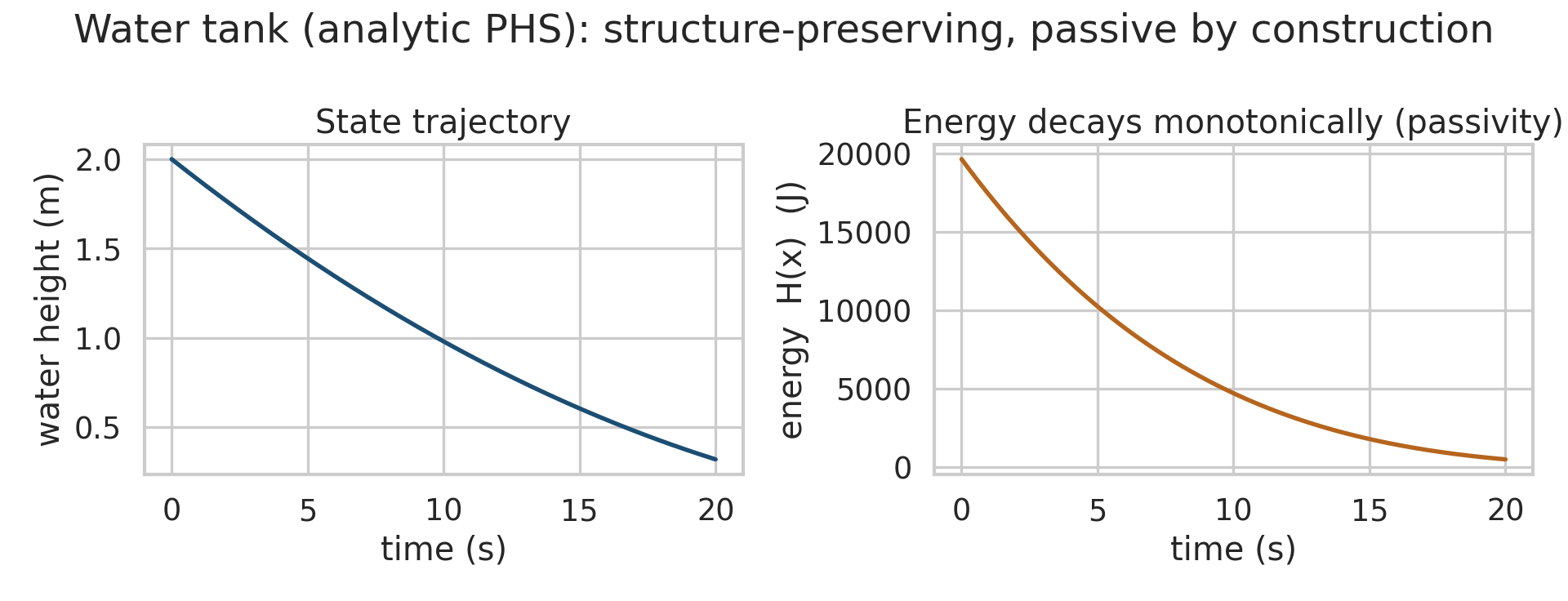 Energy decays monotonically (passive by construction); skill ≈ 0.94 vs a persistence baseline. |
| DC motor · first-principles, multi-domain. Coupled electrical + mechanical actuator — can the twin predict it with no fitting? | 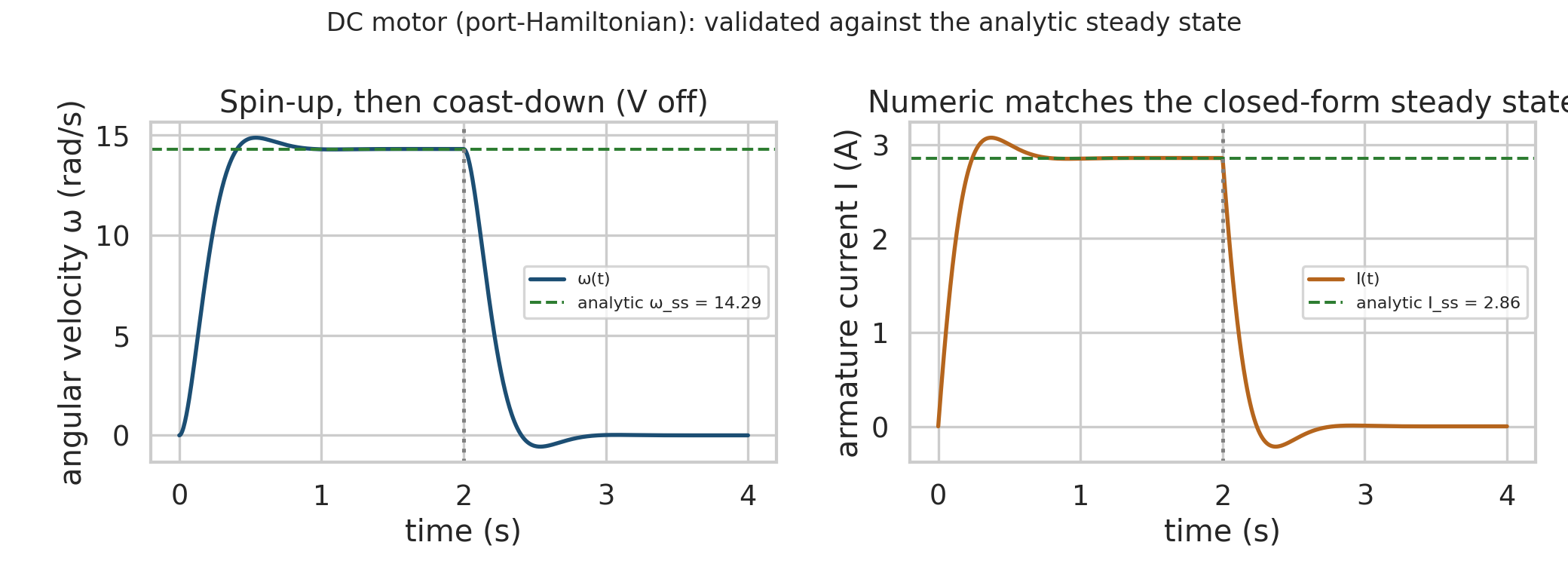 Numeric steady state matches the closed-form ω, I to within 0.001%. |
| Pumped-hydro storage · white-box, grid-scale. The dominant grid storage technology — how much energy survives a charge/discharge cycle? | 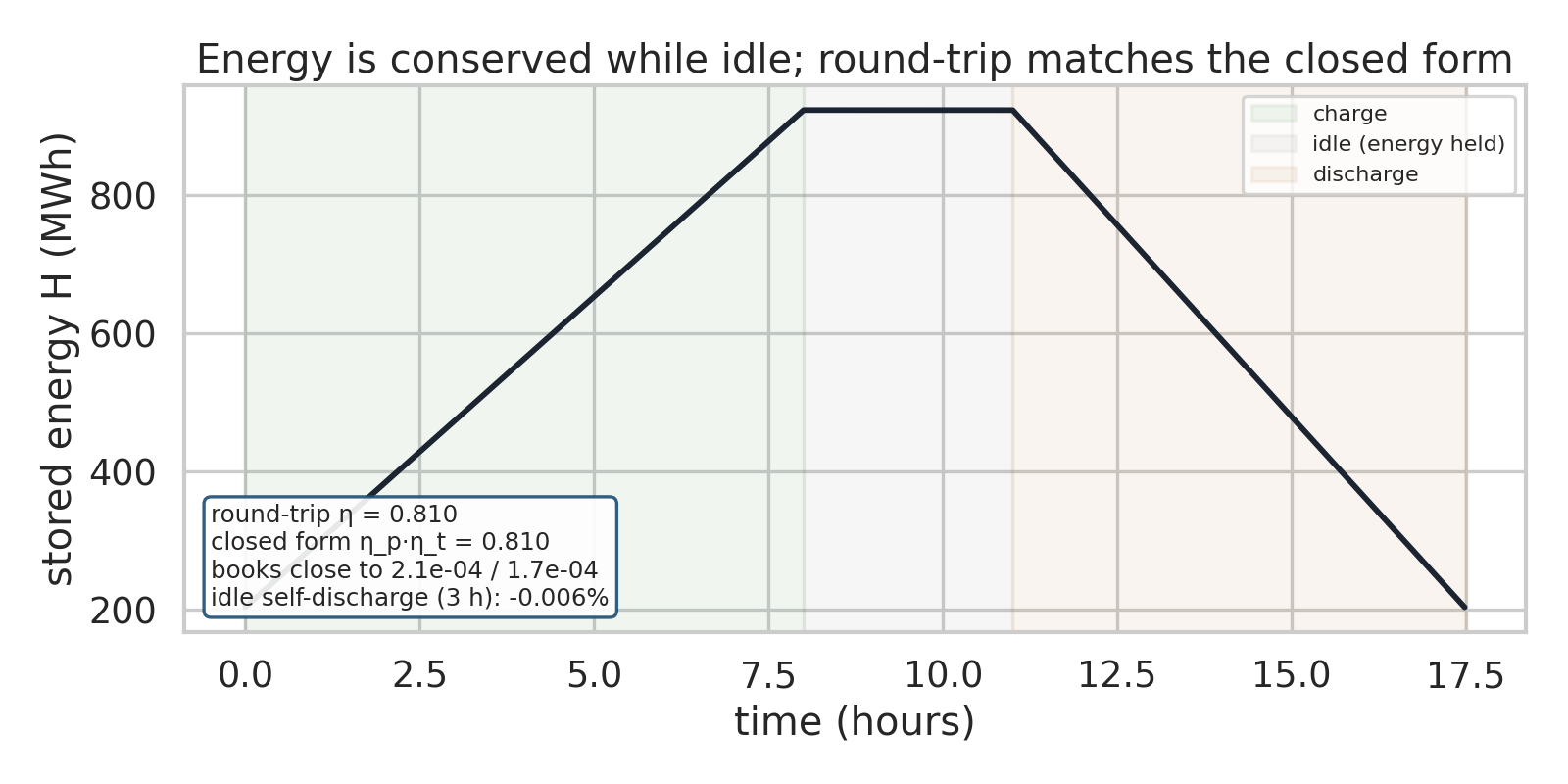 Round-trip efficiency matches the closed form ηp·ηt; energy conserved while idle. |
| Battery State-of-Health · grey-box. Forecast Li-ion SoH / remaining useful life with trustworthy intervals (predictive maintenance). | 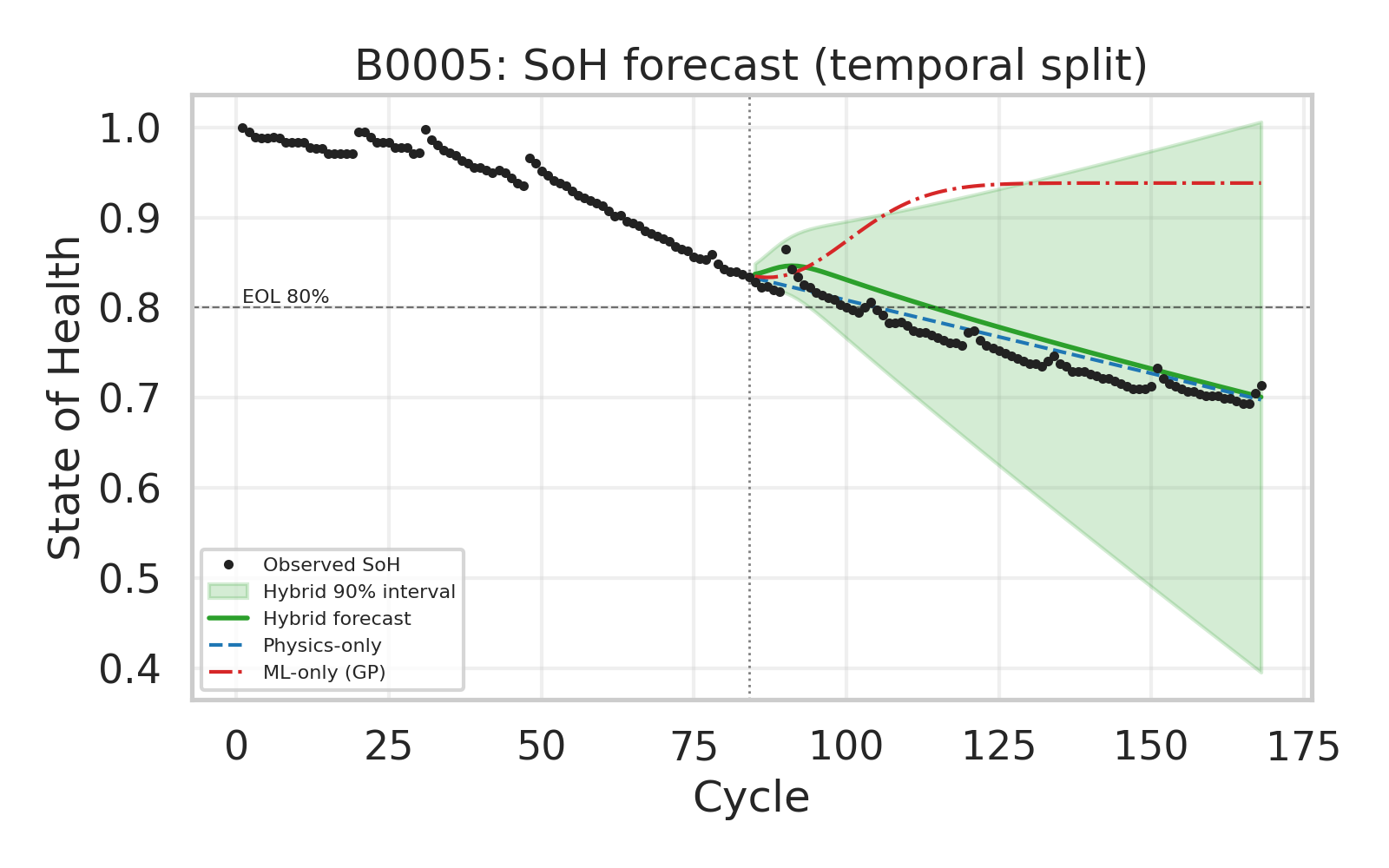 The physics-informed hybrid tracks the real decay to end-of-life; a data-only model diverges. The 90% band is calibrated. |
| Grid-scale dispatch · predictive maintenance → real-time optimization. Dispatch storage under uncertain capacity. | 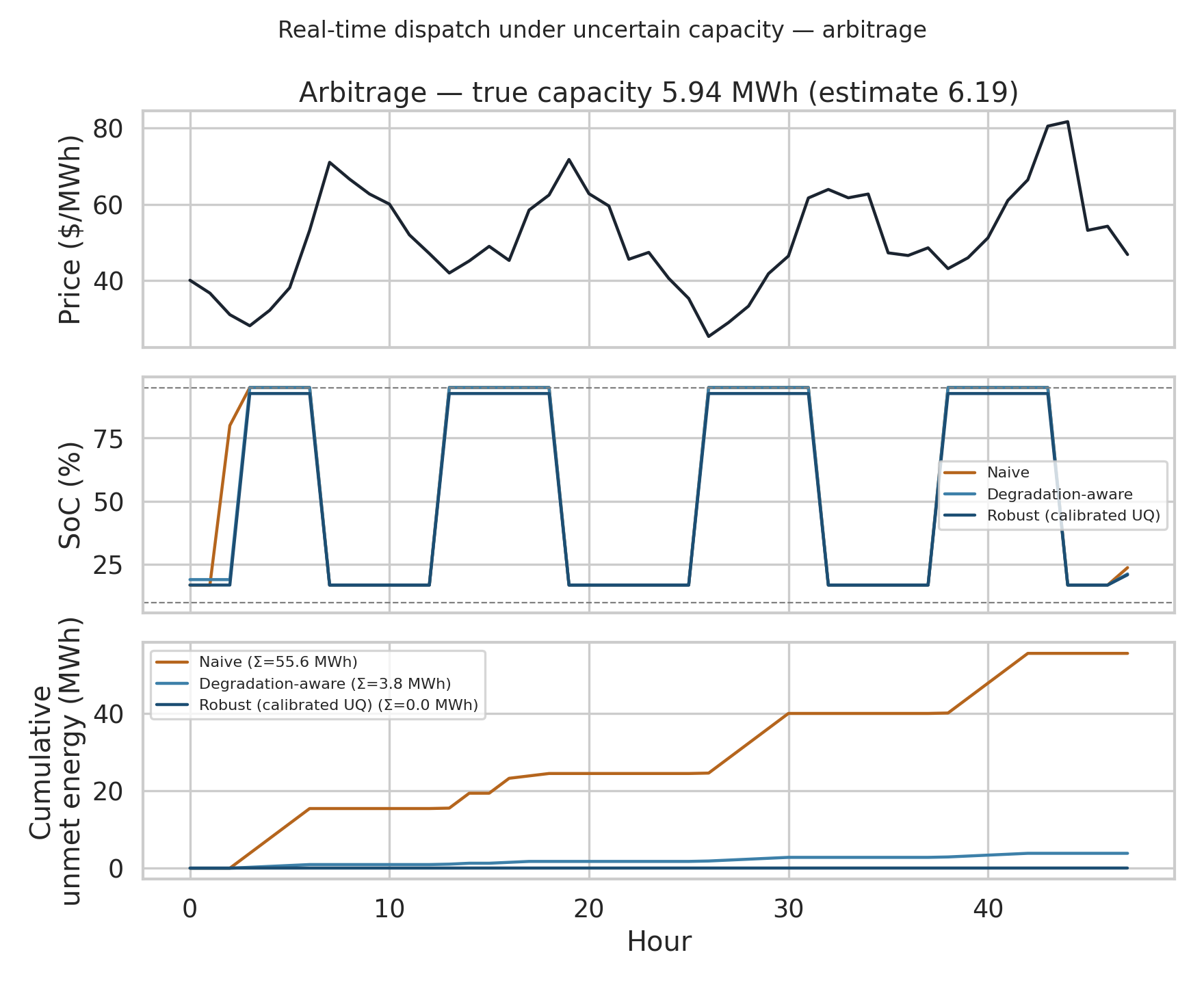 The calibrated-UQ plan leaves 0.0 MWh of demand unmet over the horizon, vs 55.6 MWh for a naive plan. |
Smaller, focused utilities that support the projects above.
High-frequency monitoring of how a neural network's internal representations evolve during training. It tracks representational dimensionality across MLPs, CNNs, Transformers and Vision Transformers, and flags discrete phase transitions (jumps) — the same DNA as Groundlens: reading the geometry of representations to see what a model is actually doing. Three lines to instrument any PyTorch model.
pip install ndtracker


Code-backed research that feeds the projects above — published, with the limits stated.
A symplectic optimizer for out-of-time ranking under class imbalance, phase-space diagnostics that separate valid from invalid LLM reasoning, and a systematic study of where geometric structure stops helping. The same DNA as the rest of Groundlens: read the geometry, state the limits.


100,000+ impressions · read it on LinkedIn
Groundlens is built on peer-reviewed research. Selected publications:
| Year | Publication | Venue / link |
|---|---|---|
| 2026 | Rotational Dynamics of Factual Constraint Processing | arXiv:2603.13259 |
| 2026 | A Geometric Taxonomy of Hallucinations | arXiv:2602.13224 |
| 2025 | Semantic Grounding Index (SGI) | arXiv:2512.13771 |
| 2025 | Hamiltonian Neural Networks for Out-of-Time Credit Scoring - accepted (peer-reviewed), IEEE DSAA 2025 | arXiv:2410.10182 |
| 2024 | Optimizing AI Reasoning: A Hamiltonian Dynamics Approach to Multi-Hop QA | arXiv:2410.04415 |

Contributions are welcome across all Groundlens repositories. Please read CONTRIBUTING.md before opening an issue or pull request.
This community follows the Contributor Covenant. See CODE_OF_CONDUCT.md.
To report a vulnerability, please follow the process in SECURITY.md — do not open a public issue for security matters.
All Groundlens open-source projects are released under the MIT License. See LICENSE.
Groundlens is an independent open-source practice for trustworthy modeling, working at the intersection of applied geometry, physics, and machine learning. Its two lines — Groundlens (LLM verification) and Otwin (physics-informed digital twins) — share a single goal: outputs you can audit before they reach production.
Maintained by Javier Marin · Madrid · javier@groundlens.dev · groundlens.dev
Verification over capability.