diff --git a/src/main/java/g3901_4000/s3993_maximum_value_of_an_alternating_sequence/Solution.java b/src/main/java/g3901_4000/s3993_maximum_value_of_an_alternating_sequence/Solution.java
new file mode 100644
index 000000000..40875b0c7
--- /dev/null
+++ b/src/main/java/g3901_4000/s3993_maximum_value_of_an_alternating_sequence/Solution.java
@@ -0,0 +1,13 @@
+package g3901_4000.s3993_maximum_value_of_an_alternating_sequence;
+
+// #Medium #Math #Greedy #Senior #Biweekly_Contest_187
+// #2026_11_17_Time_1_ms_(96.70%)_Space_42.16_MB_(87.91%)
+
+public class Solution {
+ public long maximumValue(int n, int s, int m) {
+ if (n == 1) {
+ return s;
+ }
+ return s + (long) (n / 2) * (m - 1) + 1;
+ }
+}
diff --git a/src/main/java/g3901_4000/s3993_maximum_value_of_an_alternating_sequence/readme.md b/src/main/java/g3901_4000/s3993_maximum_value_of_an_alternating_sequence/readme.md
new file mode 100644
index 000000000..3e574b0cd
--- /dev/null
+++ b/src/main/java/g3901_4000/s3993_maximum_value_of_an_alternating_sequence/readme.md
@@ -0,0 +1,44 @@
+3993\. Maximum Value of an Alternating Sequence
+
+Medium
+
+You are given three integers `n`, `s`, and `m`.
+
+A sequence `seq` of integers of length `n` is considered **valid** if:
+
+* `seq[0] = s`.
+* The sequence is **alternating**, meaning that either:
+ * `seq[0] > seq[1] < seq[2] > ...`, or
+ * `seq[0] < seq[1] > seq[2] < ...`.
+* For every adjacent pair, `|seq[i] - seq[i - 1]| <= m`.
+
+A sequence of length 1 is considered alternating.
+
+Return the **maximum** possible element that can appear in any valid sequence.
+
+OriginalJava**Example 1:**
+
+**Input:** n = 4, s = 3, m = 5
+
+**Output:** 12
+
+**Explanation:**
+
+* One valid sequence is `[3, 8, 7, 12]`.
+* The maximum element in the sequence is 12.
+
+**Example 2:**
+
+**Input:** n = 2, s = 4, m = 3
+
+**Output:** 7
+
+**Explanation:**
+
+* One valid sequence is `[4, 7]`.
+* The maximum element in the sequence is 7.
+
+**Constraints:**
+
+* 1 <= n, s <= 109
+* 1 <= m <= 105
\ No newline at end of file
diff --git a/src/main/java/g3901_4000/s3994_minimum_adjacent_swaps_to_partition_array/Solution.java b/src/main/java/g3901_4000/s3994_minimum_adjacent_swaps_to_partition_array/Solution.java
new file mode 100644
index 000000000..ecfde4efb
--- /dev/null
+++ b/src/main/java/g3901_4000/s3994_minimum_adjacent_swaps_to_partition_array/Solution.java
@@ -0,0 +1,23 @@
+package g3901_4000.s3994_minimum_adjacent_swaps_to_partition_array;
+
+// #Medium #Array #Greedy #Staff #Biweekly_Contest_187
+// #2026_11_17_Time_6_ms_(80.28%)_Space_101.87_MB_(61.97%)
+
+public class Solution {
+ public int minAdjacentSwaps(int[] nums, int a, int b) {
+ long ans = 0;
+ long c1 = 0;
+ long c2 = 0;
+ for (int v : nums) {
+ if (v < a) {
+ ans += c1 + c2;
+ } else if (v <= b) {
+ c1++;
+ ans += c2;
+ } else {
+ c2++;
+ }
+ }
+ return (int) (ans % 1000000007);
+ }
+}
diff --git a/src/main/java/g3901_4000/s3994_minimum_adjacent_swaps_to_partition_array/readme.md b/src/main/java/g3901_4000/s3994_minimum_adjacent_swaps_to_partition_array/readme.md
new file mode 100644
index 000000000..c1e5d3588
--- /dev/null
+++ b/src/main/java/g3901_4000/s3994_minimum_adjacent_swaps_to_partition_array/readme.md
@@ -0,0 +1,61 @@
+3994\. Minimum Adjacent Swaps to Partition Array
+
+Medium
+
+You are given an integer array `nums` and two integers `a` and `b` such that `a < b`.
+
+An array is called **good** if it can be split into three **contiguous** parts, in this order, such that:
+
+* Every element in the first part is **less than** `a`.
+* Every element in the second part is **in** the range `[a, b]` inclusive.
+* Every element in the third part is **greater than** `b`.
+
+Any of the three parts **may be** empty.
+
+In one **adjacent swap**, you may swap two **neighboring** elements of `nums`.
+
+Return the **minimum number** of adjacent swaps required to make `nums` good. Since the answer may be very large, return it **modulo** 109 + 7.
+
+OriginalJava**Example 1:**
+
+**Input:** nums = [1,3,2,4,5,6], a = 3, b = 4
+
+**Output:** 1
+
+**Explanation:**
+
+* Swap `nums[1]` and `nums[2]`. The array becomes `[1, 2, 3, 4, 5, 6]`.
+* This array is good because it can be split into `[1, 2]`, `[3, 4]`, and `[5, 6]`.
+
+**Example 2:**
+
+**Input:** nums = [9,7,5,3], a = 4, b = 8
+
+**Output:** 5
+
+**Explanation:**
+
+One sequence of optimal swaps is as follows:
+
+* Swap `nums[2]` and `nums[3]`. The array becomes `[9, 7, 3, 5]`.
+* Swap `nums[1]` and `nums[2]`. The array becomes `[9, 3, 7, 5]`.
+* Swap `nums[0]` and `nums[1]`. The array becomes `[3, 9, 7, 5]`.
+* Swap `nums[1]` and `nums[2]`. The array becomes `[3, 7, 9, 5]`.
+* Swap `nums[2]` and `nums[3]`. The array becomes `[3, 7, 5, 9]`.
+* This array is good because it can be split into `[3]`, `[7, 5]`, and `[9]`.
+
+**Example 3:**
+
+**Input:** nums = [3,7,5,9], a = 4, b = 8
+
+**Output:** 0
+
+**Explanation:**
+
+The array is already good. No swaps are needed.
+
+**Constraints:**
+
+* 1 <= nums.length <= 105
+* 1 <= nums[i] <= 109
+* 1 <= a < b <= 109
\ No newline at end of file
diff --git a/src/main/java/g3901_4000/s3995_minimum_cost_to_convert_string_iii/Solution.java b/src/main/java/g3901_4000/s3995_minimum_cost_to_convert_string_iii/Solution.java
new file mode 100644
index 000000000..114e9d9c0
--- /dev/null
+++ b/src/main/java/g3901_4000/s3995_minimum_cost_to_convert_string_iii/Solution.java
@@ -0,0 +1,77 @@
+package g3901_4000.s3995_minimum_cost_to_convert_string_iii;
+
+// #Hard #Array #String #Dynamic_Programming #Senior_Staff #Biweekly_Contest_187
+// #2026_11_17_Time_10_ms_(100.00%)_Space_47.23_MB_(68.97%)
+
+import java.util.Arrays;
+import java.util.List;
+
+@SuppressWarnings("java:S135")
+public class Solution {
+ public int minCost(String source, String target, List> rules, int[] costs) {
+ int n = source.length();
+ if (n != target.length()) {
+ return -1;
+ }
+ if (source.equals(target)) {
+ return 0;
+ }
+ int m = rules.size();
+ int[] len = new int[m];
+ String[] pat = new String[m];
+ String[] rep = new String[m];
+ int[] rulesCost = new int[m];
+ for (int i = 0; i < m; i++) {
+ String p = rules.get(i).get(0);
+ String r = rules.get(i).get(1);
+ pat[i] = p;
+ rep[i] = r;
+ len[i] = p.length();
+ int wild = 0;
+ for (char c : p.toCharArray()) {
+ if (c == '*') {
+ wild++;
+ }
+ }
+ rulesCost[i] = costs[i] + wild;
+ }
+ int in = Integer.MAX_VALUE / 2;
+ int[] dp = new int[n + 1];
+ Arrays.fill(dp, in);
+ dp[0] = 0;
+ for (int i = 0; i < n; i++) {
+ if (dp[i] == in) {
+ continue;
+ }
+ if (source.charAt(i) == target.charAt(i) && dp[i] < dp[i + 1]) {
+ dp[i + 1] = dp[i];
+ }
+ for (int k = 0; k < m; k++) {
+ int l = len[k];
+ if (i + l > n) {
+ continue;
+ }
+ boolean match = true;
+ for (int j = 0; j < l; j++) {
+ char pc = pat[k].charAt(j);
+ char sc = source.charAt(i + j);
+ if (pc != '*' && pc != sc) {
+ match = false;
+ break;
+ }
+ }
+ if (!match) {
+ continue;
+ }
+ if (!target.substring(i, i + l).equals(rep[k])) {
+ continue;
+ }
+ int nd = dp[i] + rulesCost[k];
+ if (nd < dp[i + l]) {
+ dp[i + l] = nd;
+ }
+ }
+ }
+ return dp[n] >= in ? -1 : dp[n];
+ }
+}
diff --git a/src/main/java/g3901_4000/s3995_minimum_cost_to_convert_string_iii/readme.md b/src/main/java/g3901_4000/s3995_minimum_cost_to_convert_string_iii/readme.md
new file mode 100644
index 000000000..9949eafbd
--- /dev/null
+++ b/src/main/java/g3901_4000/s3995_minimum_cost_to_convert_string_iii/readme.md
@@ -0,0 +1,74 @@
+3995\. Minimum Cost to Convert String III
+
+Hard
+
+You are given two strings, `source` and `target`.
+
+You are also given a 2D string array `rules`, where rules[i] = [patterni, replacementi], and an integer array `costs`, where `costs[i]` is the base cost of applying `rules[i]`. Both arrays have the same length. Additionally, patterni and replacementi have the same length.
+
+You may apply **any** rule **any** number of times. Each rule application works as follows:
+
+* Choose an index `l` such that the range of positions from `l` to l + patterni.length - 1 exists in the current string and **none** of these positions has been used in a previous rule application.
+* For each index `j`, the character patterni[j] must either be **equal** to the current character at position `l + j`, or be `'*'`.
+* Replace the characters in this range with replacementi. The replacement is used **exactly** as given and does not contain wildcards.
+* The cost of this rule application is `costs[i]` **plus** the number of `'*'` characters in patterni.
+* Once a character position has been used in a rule application, it **cannot** be used in any **later** rule application.
+
+Since every patterni and replacementi have the same length, character positions are preserved after every rule application.
+
+Return the **minimum** total cost required to transform `source` into `target`. If it is impossible, return -1.
+
+OriginalJava**Example 1:**
+
+**Input:** source = "hello", target = "world", rules = [["he","wo"],["llo","rld"]], costs = [3,4]
+
+**Output:** 7
+
+**Explanation:**
+
+* Apply `rules[0]` to replace `"he"` with `"wo"` at cost 3, so the string becomes `"wollo"`.
+* Apply `rules[1]` to replace `"llo"` with `"rld"` at cost 4, so the string becomes `"world"`.
+* The total cost is `3 + 4 = 7`.
+
+**Example 2:**
+
+**Input:** source = "cat", target = "dog", rules = [["c\*t","dog"]], costs = [2]
+
+**Output:** 3
+
+**Explanation:**
+
+* Apply `rules[0]` to replace `"cat"` with `"dog"`. The wildcard `'*'` matches `'a'`, adding 1 to the base cost 2.
+* The total cost is `2 + 1 = 3`.
+
+**Example 3:**
+
+**Input:** source = "test", target = "next", rules = [["\*e\*t","next"]], costs = [4]
+
+**Output:** 6
+
+**Explanation:**
+
+* Apply `rules[0]` to replace `"test"` with `"next"`. The first wildcard matches `'t'` and the second wildcard matches `'s'`, adding 2 to the base cost 4.
+* The total cost is `4 + 2 = 6`.
+
+**Example 4:**
+
+**Input:** source = "ab", target = "bc", rules = [["a\*","bd"]], costs = [9]
+
+**Output:** \-1
+
+**Explanation:**
+
+No sequence of rule applications can transform `source` into `target`, so the answer is -1.
+
+**Constraints:**
+
+* `1 <= source.length == target.length <= 5000`
+* `source` and `target` consist of lowercase English letters.
+* `1 <= rules.length == costs.length <= 200`
+* rules[i] = [patterni, replacementi]
+* 1 <= patterni.length == replacementi.length <= 20
+* patterni contains at least one lowercase English letter and at most 5 `'*'` characters.
+* replacementi contains only lowercase English letters.
+* `1 <= costs[i] <= 1000`
\ No newline at end of file
diff --git a/src/main/java/g3901_4000/s3996_even_number_of_knight_moves/Solution.java b/src/main/java/g3901_4000/s3996_even_number_of_knight_moves/Solution.java
new file mode 100644
index 000000000..7defb621c
--- /dev/null
+++ b/src/main/java/g3901_4000/s3996_even_number_of_knight_moves/Solution.java
@@ -0,0 +1,10 @@
+package g3901_4000.s3996_even_number_of_knight_moves;
+
+// #Easy #Array #Math #Mid_Level #Weekly_Contest_511
+// #2026_11_17_Time_1_ms_(88.64%)_Space_43.26_MB_(96.70%)
+
+public class Solution {
+ public boolean canReach(int[] start, int[] target) {
+ return (start[0] + start[1]) % 2 == (target[0] + target[1]) % 2;
+ }
+}
diff --git a/src/main/java/g3901_4000/s3996_even_number_of_knight_moves/readme.md b/src/main/java/g3901_4000/s3996_even_number_of_knight_moves/readme.md
new file mode 100644
index 000000000..5b04c9abc
--- /dev/null
+++ b/src/main/java/g3901_4000/s3996_even_number_of_knight_moves/readme.md
@@ -0,0 +1,38 @@
+3996\. Even Number of Knight Moves
+
+Easy
+
+You are given two integer arrays `start` and `target`, where each array is of the form `[x, y]` representing a cell on a standard 8 x 8 chessboard.
+
+Return `true` if a knight can move from `start` to `target` in an **even** number of moves. Otherwise, return `false`.
+
+**Note:** A valid knight move consists of moving two squares in one direction and one square perpendicular to it. The figure below illustrates all eight possible moves from a cell.
+
+
+
+OriginalJava**Example 1:**
+
+**Input:** start = [1,1], target = [2,2]
+
+**Output:** true
+
+**Explanation:**
+
+One possible sequence of moves is `(1, 1) -> (3, 2) -> (2, 4) -> (4, 3) -> (2, 2)`.
+
+The knight reaches the target in 4 moves, which is even. Thus, the answer is `true`.
+
+**Example 2:**
+
+**Input:** start = [4,5], target = [6,6]
+
+**Output:** false
+
+**Explanation:**
+
+It is impossible to reach `target = [6, 6]` from `start = [4, 5]` in an even number of moves. Thus, the answer is `false`.
+
+**Constraints:**
+
+* `start.length == target.length == 2`
+* `0 <= start[i], target[i] <= 7`
\ No newline at end of file
diff --git a/src/main/java/g3901_4000/s3997_count_dominant_nodes_in_a_binary_tree/Solution.java b/src/main/java/g3901_4000/s3997_count_dominant_nodes_in_a_binary_tree/Solution.java
new file mode 100644
index 000000000..5f03cc4e4
--- /dev/null
+++ b/src/main/java/g3901_4000/s3997_count_dominant_nodes_in_a_binary_tree/Solution.java
@@ -0,0 +1,48 @@
+package g3901_4000.s3997_count_dominant_nodes_in_a_binary_tree;
+
+// #Medium #Tree #Binary_Tree #Senior #Weekly_Contest_511 #Depth_First_Search
+// #2026_11_17_Time_7_ms_(95.22%)_Space_172.70_MB_(86.01%)
+
+import com_github_leetcode.TreeNode;
+
+/*
+ * Definition for a binary tree node.
+ * public class TreeNode {
+ * int val;
+ * TreeNode left;
+ * TreeNode right;
+ * TreeNode() {}
+ * TreeNode(int val) { this.val = val; }
+ * TreeNode(int val, TreeNode left, TreeNode right) {
+ * this.val = val;
+ * this.left = left;
+ * this.right = right;
+ * }
+ * }
+ */
+public class Solution {
+ private int dominantNode;
+
+ public int countDominantNodes(TreeNode root) {
+ dominantNode = 0;
+ dfs(root);
+ return dominantNode;
+ }
+
+ private int dfs(TreeNode root) {
+ if (root == null) {
+ return Integer.MIN_VALUE;
+ }
+ if (root.left == null && root.right == null) {
+ dominantNode++;
+ return root.val;
+ }
+ int left = dfs(root.left);
+ int right = dfs(root.right);
+ int max = Math.max(left, right);
+ if (root.val >= max) {
+ dominantNode++;
+ }
+ return Math.max(max, root.val);
+ }
+}
diff --git a/src/main/java/g3901_4000/s3997_count_dominant_nodes_in_a_binary_tree/readme.md b/src/main/java/g3901_4000/s3997_count_dominant_nodes_in_a_binary_tree/readme.md
new file mode 100644
index 000000000..cadb15884
--- /dev/null
+++ b/src/main/java/g3901_4000/s3997_count_dominant_nodes_in_a_binary_tree/readme.md
@@ -0,0 +1,43 @@
+3997\. Count Dominant Nodes in a Binary Tree
+
+Medium
+
+You are given the `root` of a complete binary tree.
+
+A node `x` is called **dominant** if its value is equal to the maximum value among all nodes in the subtree rooted at `x`.
+
+Return the number of dominant nodes in the tree.
+
+**Example 1:**
+
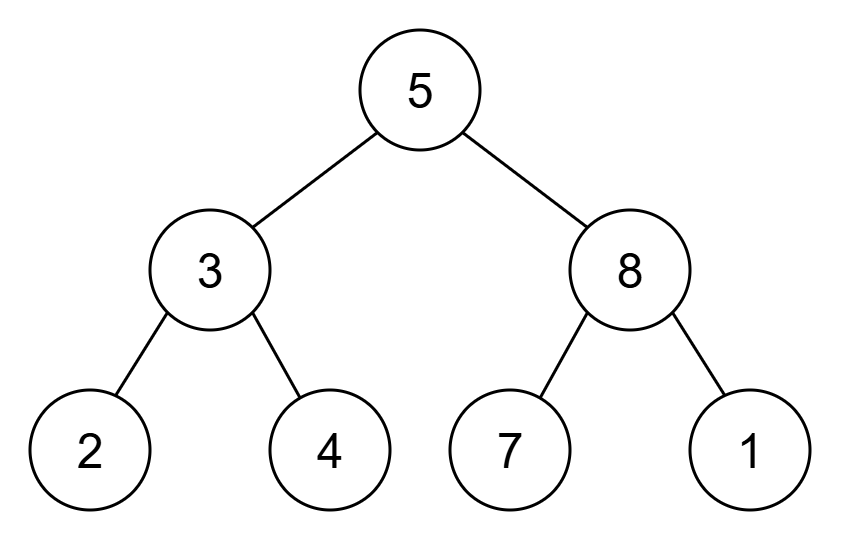
+
+
+**Input:** root = [5,3,8,2,4,7,1]
+
+**Output:** 5
+
+**Explanation:**
+
+* The leaf nodes with values 2, 4, 7, and 1 are dominant.
+* The node with value 8 is dominant because its value is the maximum value in its subtree `[8, 7, 1]`.
+* Thus, the answer is 5.
+
+**Example 2:**
+
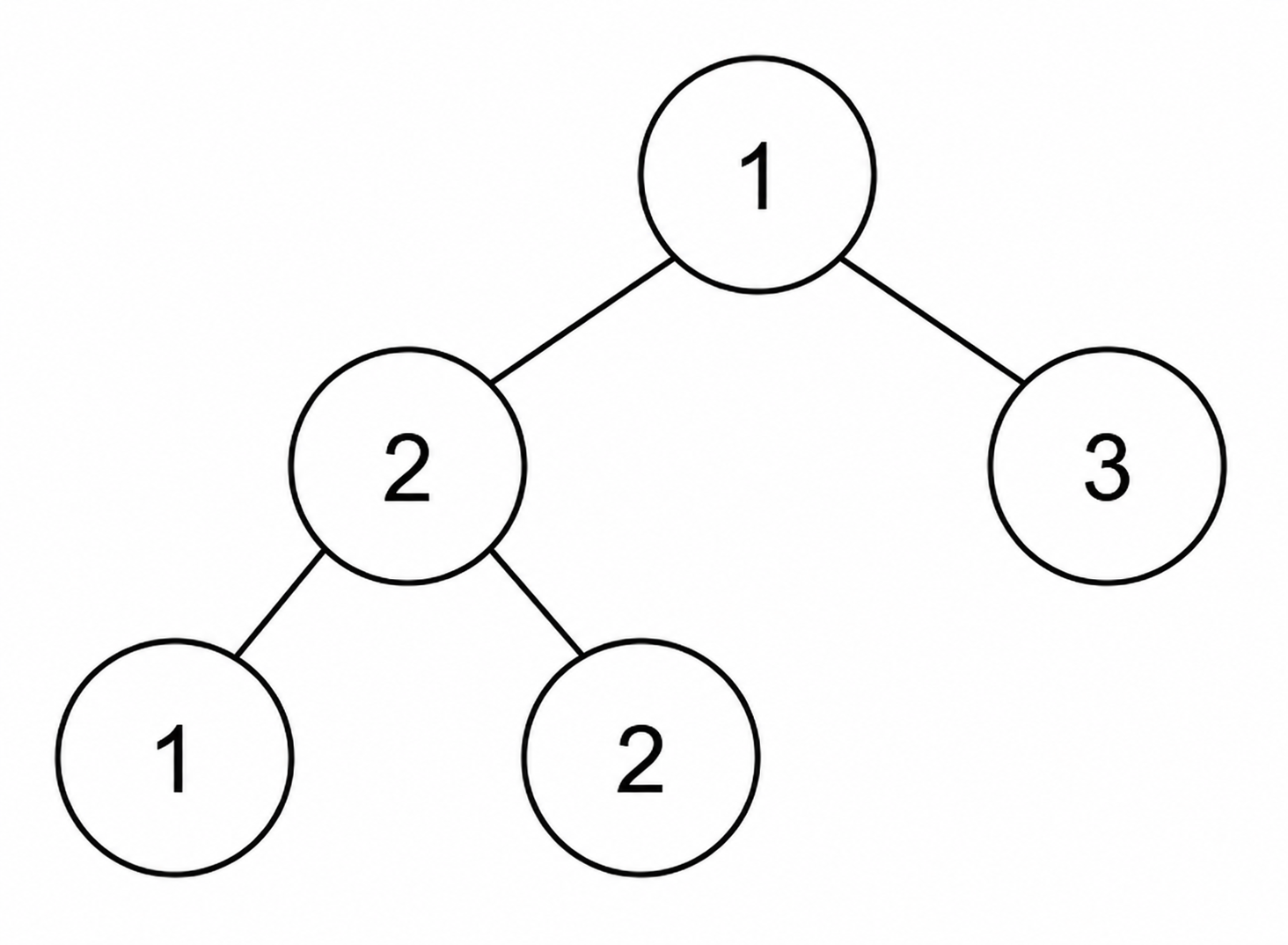
+
+
+**Input:** root = [1,2,3,1,2]
+
+**Output:** 4
+
+**Explanation:**
+
+* The leaf nodes with values 1, 2, and 3 are dominant.
+* The node with value 2 whose subtree is `[2, 1, 2]` is dominant because its value is the maximum value in its subtree.
+* Thus, the answer is 4.
+
+**Constraints:**
+
+* The number of nodes in the tree is in the range [1, 105].
+* 1 <= Node.val <= 109
+* The tree is guaranteed to be a complete binary tree.
\ No newline at end of file
diff --git a/src/main/java/g3901_4000/s3998_transform_binary_string_using_subsequence_sort/Solution.java b/src/main/java/g3901_4000/s3998_transform_binary_string_using_subsequence_sort/Solution.java
new file mode 100644
index 000000000..ad813c4b5
--- /dev/null
+++ b/src/main/java/g3901_4000/s3998_transform_binary_string_using_subsequence_sort/Solution.java
@@ -0,0 +1,88 @@
+package g3901_4000.s3998_transform_binary_string_using_subsequence_sort;
+
+// #Medium #Array #String #Greedy #Two_Pointers #Staff #Weekly_Contest_511
+// #2026_11_17_Time_25_ms_(100.00%)_Space_85.98_MB_(6.45%)
+
+import java.util.ArrayList;
+import java.util.List;
+import java.util.concurrent.CompletableFuture;
+
+public class Solution {
+ public boolean[] transformStr(String s, String[] strs) {
+ int len = strs.length;
+ int[] count = new int[2];
+ for (char ch : s.toCharArray()) {
+ count[ch - '0']++;
+ }
+ // create lists of all those tasks, which are no blocking main thread
+ List> listOfFutureTasks = new ArrayList<>();
+ for (String target : strs) {
+ listOfFutureTasks.add(canConvert(s, target, count));
+ }
+ // allOf will make sure all things are running concurrently/parallely while .join() can be
+ // used to complete em all
+ CompletableFuture allDone =
+ CompletableFuture.allOf(listOfFutureTasks.toArray(new CompletableFuture[0]));
+ // collect results when allDone is complete
+ boolean[] res = new boolean[len];
+ allDone.thenRun(
+ () -> {
+ for (int i = 0; i < len; i++) {
+ res[i] = listOfFutureTasks.get(i).join();
+ }
+ })
+ .join();
+ return res;
+ }
+
+ private CompletableFuture canConvert(String src, String target, int[] count) {
+ // first check there should be equal or less number of 1's and 0's
+ return CompletableFuture.supplyAsync(() -> validateBalance(target, count))
+ .thenApply(dst -> dst != null && isPossibleToConvert(src, dst));
+ }
+
+ private boolean isPossibleToConvert(String src, String dst) {
+ int n = src.length();
+ int zero = 0;
+ for (int i = 0; i < n; i++) {
+ if (src.charAt(i) == '0') {
+ zero++;
+ }
+ if (dst.charAt(i) == '0') {
+ zero--;
+ }
+ if (zero > 0) {
+ return false;
+ }
+ }
+ return true;
+ }
+
+ private String validateBalance(String s, int[] count) {
+ int[] local = new int[2];
+ for (char ch : s.toCharArray()) {
+ if (ch == '?') {
+ continue;
+ }
+ local[ch - '0']++;
+ }
+ if (local[0] > count[0] || local[1] > count[1]) {
+ return null;
+ }
+ int diff0 = count[0] - local[0];
+ int diff1 = count[1] - local[1];
+ StringBuilder sb = new StringBuilder();
+ for (char c : s.toCharArray()) {
+ if (c == '?') {
+ if (diff0-- > 0) {
+ sb.append('0');
+ } else if (diff1-- > 0) {
+ sb.append('1');
+ }
+ } else {
+ sb.append(c);
+ }
+ }
+ return sb.toString();
+ }
+}
diff --git a/src/main/java/g3901_4000/s3998_transform_binary_string_using_subsequence_sort/readme.md b/src/main/java/g3901_4000/s3998_transform_binary_string_using_subsequence_sort/readme.md
new file mode 100644
index 000000000..6b1510fdd
--- /dev/null
+++ b/src/main/java/g3901_4000/s3998_transform_binary_string_using_subsequence_sort/readme.md
@@ -0,0 +1,69 @@
+3998\. Transform Binary String Using Subsequence Sort
+
+Medium
+
+You are given a binary string `s`.
+
+You are also given an array of strings `strs`, where each `strs[i]` has the **same** length as `s` and consists of characters `'0'`, `'1'`, and `'?'`. Each `'?'` can be replaced by either `'0'` or `'1'`.
+
+You may perform the following operation any number of times (including zero):
+
+* Choose any subsequence `sub` of `s`.
+* Sort `sub` in **non-decreasing** order.
+* Replace the chosen **subsequence** in `s` with the sorted `sub`, keeping all other characters unchanged.
+
+Return a boolean array `ans`, where `ans[i]` is `true` if it's possible to replace all `'?'` in `strs[i]` with `'0'` or `'1'` and transform `s` into the resulting string using the allowed operation above, otherwise return `false`.
+
+OriginalJava**Example 1:**
+
+**Input:** s = "101", strs = ["1?1","0?1","0?0"]
+
+**Output:** [true,true,false]
+
+**Explanation:**
+
+| `i` | `strs[i]` | Replacement | Result `strs[i]` | Operation(s) | Result |
+| --- | --- | --- | --- | --- | --- |
+| 0 | `"1?1"` | `? → 0` | `"101"` | Matches `s`. | `true` |
+| 1 | `"0?1"` | `? → 1` | `"011"` | Select the subsequence at indices `[0..2]` of `s` → `"101"`.
Sort `"101"` to get `"011" = strs[i]`. | `true` |
+| 2 | `"0?0"` | `? → 0` or `1` | `"000"` or `"010"` | Not feasible. | `false` |
+
+Thus, `ans = [true, true, false]`.
+
+**Example 2:**
+
+**Input:** s = "1100", strs = ["0011","11?1","1?1?"]
+
+**Output:** [true,false,true]
+
+**Explanation:**
+
+| `i` | `strs[i]` | Replacement | Result `strs[i]` | Operation(s) | Result |
+| --- | --- | --- | --- | --- | --- |
+| 0 | `"0011"` | \- | `"0011"` | Select the subsequence at indices `[0..3]` of `s` → `"1100"`.
Sort `"1100"` to get `"0011" = strs[i]`. | `true` |
+| 1 | `"11?1"` | `? → 0` | `"1101"` | Not feasible. | `false` |
+| 2 | `"1?1?"` | First `? → 0`
Second `? → 0` | `"1010"` | Select the subsequence at indices `[1, 2]` of `s` → `"10"`.
Sort `"10"` to get `"01"`, so s = "1010". | `true` |
+
+Thus, `ans = [true, false, true]`.
+
+**Example 3:**
+
+**Input:** s = "1010", strs = ["0011"]
+
+**Output:** [true]
+
+**Explanation:**
+
+| `i` | `strs[i]` | Replacement | Result `strs[i]` | Operation(s) | Result |
+| --- | --- | --- | --- | --- | --- |
+| 0 | `"0011"` | \- | `"0011"` | Select the subsequence at indices `[0, 2, 3]` of `s` → `"110"`.
Sort `"110"` to get `"011"`, so s = "0011" = strs[i]. | `true` |
+
+Thus, `ans = [true]`.
+
+**Constraints:**
+
+* `1 <= n == s.length <= 2000`
+* `s[i]` is either `'0'` or `'1'`.
+* `1 <= strs.length <= 2000`
+* `strs[i].length == n`
+* `strs[i]` is either `'0'`, `'1'`, or `'?'`.
\ No newline at end of file
diff --git a/src/main/java/g3901_4000/s3999_minimum_number_of_string_groups_through_transformations/Solution.java b/src/main/java/g3901_4000/s3999_minimum_number_of_string_groups_through_transformations/Solution.java
new file mode 100644
index 000000000..a07dff57f
--- /dev/null
+++ b/src/main/java/g3901_4000/s3999_minimum_number_of_string_groups_through_transformations/Solution.java
@@ -0,0 +1,73 @@
+package g3901_4000.s3999_minimum_number_of_string_groups_through_transformations;
+
+// #Hard #String #Hash_Table #Two_Pointers #Senior_Staff #Weekly_Contest_511
+// #2026_11_17_Time_83_ms_(100.00%)_Space_60.37_MB_(97.83%)
+
+import java.util.HashSet;
+
+public class Solution {
+ public int minimumGroups(String[] words) {
+ HashSet set = new HashSet<>();
+ for (String w : words) {
+ int n = w.length();
+ int evenLen = (n + 1) >> 1;
+ int oddLen = n >> 1;
+ char[] even = new char[evenLen];
+ char[] odd = new char[oddLen];
+ int ei = 0;
+ int oi = 0;
+ for (int i = 0; i < n; i++) {
+ if ((i & 1) == 0) {
+ even[ei++] = w.charAt(i);
+ } else {
+ odd[oi++] = w.charAt(i);
+ }
+ }
+ int eStart = booth(even);
+ int oStart = booth(odd);
+ long h1 = hash(even, eStart);
+ long h2 = hash(odd, oStart);
+ long key = h1 * 1000003L + h2;
+ set.add(key);
+ }
+ return set.size();
+ }
+
+ private int booth(char[] s) {
+ int n = s.length;
+ if (n <= 1) {
+ return 0;
+ }
+ int i = 0;
+ int j = 1;
+ int k = 0;
+ while (i < n && j < n && k < n) {
+ char a = s[(i + k) % n];
+ char b = s[(j + k) % n];
+ if (a == b) {
+ k++;
+ } else if (a > b) {
+ i += k + 1;
+ if (i <= j) {
+ i = j + 1;
+ }
+ k = 0;
+ } else {
+ j += k + 1;
+ if (j <= i) {
+ j = i + 1;
+ }
+ k = 0;
+ }
+ }
+ return Math.min(i, j);
+ }
+
+ private long hash(char[] s, int start) {
+ long h = 0;
+ for (int i = 0; i < s.length; i++) {
+ h = h * 131 + s[(start + i) % s.length];
+ }
+ return h;
+ }
+}
diff --git a/src/main/java/g3901_4000/s3999_minimum_number_of_string_groups_through_transformations/readme.md b/src/main/java/g3901_4000/s3999_minimum_number_of_string_groups_through_transformations/readme.md
new file mode 100644
index 000000000..0f3a98f17
--- /dev/null
+++ b/src/main/java/g3901_4000/s3999_minimum_number_of_string_groups_through_transformations/readme.md
@@ -0,0 +1,73 @@
+3999\. Minimum Number of String Groups Through Transformations
+
+Hard
+
+You are given an array of strings `words`.
+
+Define a **transformation** on a string `s` as follows:
+
+* Let `E` be the subsequence of characters at even indices of `s`.
+* Let `O` be the **subsequence** of characters at odd indices of `s`.
+* **Independently** cyclically shift `E` and `O` by **any** number of positions to the right, possibly zero.
+* Reconstruct the string by placing the shifted `E` characters back into even indices and the shifted `O` characters back into odd indices.
+
+Two strings are **equivalent** if one can be transformed into the other by a **single** transformation.
+
+Partition `words` into the **minimum** number of groups such that:
+
+* Every string belongs to **exactly** one group.
+* Every pair of strings in the same group are **equivalent**.
+
+Return an integer denoting the **minimum** number of groups.
+
+OriginalJava**Example 1:**
+
+**Input:** words = ["ntgwz","zwntg"]
+
+**Output:** 1
+
+**Explanation:**
+
+* For `"ntgwz"`, the even-index subsequence is `"ngz"` and the odd-index subsequence is `"tw"`.
+* Shift `"ngz"` right by `1` position to obtain `"zng"`, and shift `"tw"` right by `1` position to obtain `"wt"`.
+* After reconstructing the string, we obtain `"zwntg"`.
+* Therefore, both strings are equivalent and belong to the same group.
+
+**Example 2:**
+
+**Input:** words = ["abc","cab","bac","acb","bca","cba"]
+
+**Output:** 3
+
+**Explanation:**
+
+The strings can be partitioned into the following groups:
+
+* `["abc","cba"]`
+* `["cab","bac"]`
+* `["acb","bca"]`
+
+**Example 3:**
+
+**Input:** words = ["leet","abb","bab","deed","edde","code","bba"]
+
+**Output:** 5
+
+**Explanation:**
+
+The strings can be partitioned into the following groups:
+
+* `["abb","bba"]`
+* `["deed","edde"]`
+* `["leet"]`
+* `["bab"]`
+* `["code"]`
+
+All pairs of strings in each group are equivalent.
+
+**Constraints:**
+
+* 1 <= words.length <= 105
+* 1 <= words[i].length <= 5 * 105
+* The sum of `words[i].length` does not exceed 5 * 105.
+* `words[i]` consist of lowercase English letters.
\ No newline at end of file
diff --git a/src/main/java/g3901_4000/s4000_largest_integer_with_given_digit_sum/Solution.java b/src/main/java/g3901_4000/s4000_largest_integer_with_given_digit_sum/Solution.java
new file mode 100644
index 000000000..d1bf524c4
--- /dev/null
+++ b/src/main/java/g3901_4000/s4000_largest_integer_with_given_digit_sum/Solution.java
@@ -0,0 +1,22 @@
+package g3901_4000.s4000_largest_integer_with_given_digit_sum;
+
+// #Easy #Math #Greedy #Mid_Level #Weekly_Contest_512
+// #2026_11_17_Time_1_ms_(68.99%)_Space_42.00_MB_(64.02%)
+
+public class Solution {
+ public int largestInteger(int n, int s) {
+ if (9 * n < s) {
+ return -1;
+ }
+ if (s == 0) {
+ return 0;
+ }
+ StringBuilder sb = new StringBuilder();
+ for (int i = 0; i < n; i++) {
+ int d = Math.min(9, s);
+ sb.append(d);
+ s -= d;
+ }
+ return Integer.parseInt(sb.toString());
+ }
+}
diff --git a/src/main/java/g3901_4000/s4000_largest_integer_with_given_digit_sum/readme.md b/src/main/java/g3901_4000/s4000_largest_integer_with_given_digit_sum/readme.md
new file mode 100644
index 000000000..4bb61d987
--- /dev/null
+++ b/src/main/java/g3901_4000/s4000_largest_integer_with_given_digit_sum/readme.md
@@ -0,0 +1,42 @@
+4000\. Largest Integer With Given Digit Sum
+
+Easy
+
+You are given two non-negative integers `n` and `s`.
+
+Return the **largest** integer that has **at most** `n` digits and whose sum of digits is `s`. If no such integer exists, return -1.
+
+OriginalJava**Example 1:**
+
+**Input:** n = 2, s = 9
+
+**Output:** 90
+
+**Explanation:**
+
+The largest integer with at most 2 digits that has a sum of digits of 9 is 90.
+
+**Example 2:**
+
+**Input:** n = 2, s = 19
+
+**Output:** \-1
+
+**Explanation:**
+
+There is no integer with at most 2 digits that has a sum of digits of 19, so the answer is -1.
+
+**Example 3:**
+
+**Input:** n = 5, s = 0
+
+**Output:** 0
+
+**Explanation:**
+
+The only non-negative integer whose digits sum to 0 is 0.
+
+**Constraints:**
+
+* `1 <= n <= 5`
+* `0 <= s <= 100`
\ No newline at end of file
diff --git a/src/main/java/g4001_4100/s4001_aggregate_two_time_series/Solution.java b/src/main/java/g4001_4100/s4001_aggregate_two_time_series/Solution.java
new file mode 100644
index 000000000..956cfc276
--- /dev/null
+++ b/src/main/java/g4001_4100/s4001_aggregate_two_time_series/Solution.java
@@ -0,0 +1,43 @@
+package g4001_4100.s4001_aggregate_two_time_series;
+
+// #Medium #Array #Two_Pointers #Senior #Weekly_Contest_512
+// #2026_11_17_Time_9_ms_(100.00%)_Space_167.92_MB_(85.71%)
+
+import java.util.ArrayList;
+import java.util.List;
+
+public class Solution {
+ public List> aggregateTimeSeries(int[][] left, int[][] right) {
+ int n = left.length;
+ int m = right.length;
+ List> result = new ArrayList<>(left.length + m);
+ int i = 0;
+ int j = 0;
+ while (i < n && j < m) {
+ int[] lp = left[i];
+ int[] rp = right[j];
+ int cmp = Integer.compare(lp[0], rp[0]);
+ int value = lp[1] + rp[1];
+ if (cmp < 0) {
+ result.add(List.of(lp[0], value));
+ i++;
+ } else if (cmp > 0) {
+ result.add(List.of(rp[0], value));
+ j++;
+ } else {
+ result.add(List.of(rp[0], value));
+ i++;
+ j++;
+ }
+ }
+ while (i < n) {
+ result.add(List.of(left[i][0], left[i][1]));
+ i++;
+ }
+ while (j < m) {
+ result.add(List.of(right[j][0], right[j][1]));
+ j++;
+ }
+ return result;
+ }
+}
diff --git a/src/main/java/g4001_4100/s4001_aggregate_two_time_series/readme.md b/src/main/java/g4001_4100/s4001_aggregate_two_time_series/readme.md
new file mode 100644
index 000000000..120ce6661
--- /dev/null
+++ b/src/main/java/g4001_4100/s4001_aggregate_two_time_series/readme.md
@@ -0,0 +1,69 @@
+4001\. Aggregate Two Time Series
+
+Medium
+
+You are given two 2D integer arrays `series1` and `series2`.
+
+Each element in both series is of the form `[timestamp, value]`, where:
+
+* `timestamp` is an integer representing the time.
+* `value` is an integer representing the value at that timestamp.
+
+Each array is sorted in strictly increasing order of `timestamp`.
+
+For any timestamp **not present** in a series, its value is taken from the **next available timestamp** in the same series if one exists. Otherwise, its value is considered 0.
+
+The **aggregated series** is formed by summing the corresponding values from both series at every timestamp that appears in either series.
+
+Return the **aggregated series** as a 2D integer array of `[timestamp, summedValue]` pairs, sorted in **strictly increasing** order of timestamp.
+
+OriginalJava**Example 1:**
+
+**Input:** series1 = [[1,3],[4,1]], series2 = [[2,2],[5,2]]
+
+**Output:** [[1,5],[2,3],[4,3],[5,2]]
+
+**Explanation:**
+
+| Timestamp | `series1` | `series2` | `summedValue` |
+| --- | --- | --- | --- |
+| 1 | 3 | 2 | 5 |
+| 2 | 1 | 2 | 3 |
+| 4 | 1 | 2 | 3 |
+| 5 | 0 | 2 | 2 |
+
+Thus, the aggregated series is `[[1, 5], [2, 3], [4, 3], [5, 2]]`.
+
+**Example 2:**
+
+**Input:** series1 = [[1,5],[3,1]], series2 = [[2,2]]
+
+**Output:** [[1,7],[2,3],[3,1]]
+
+**Explanation:**
+
+| Timestamp | `series1` | `series2` | `summedValue` |
+| --- | --- | --- | --- |
+| 1 | 5 | 2 | 7 |
+| 2 | 1 | 2 | 3 |
+| 3 | 1 | 0 | 1 |
+
+Thus, the aggregated series is `[[1, 7], [2, 3], [3, 1]]`.
+
+**Example 3:**
+
+**Input:** series1 = [[1,5]], series2 = [[1000000000,2]]
+
+**Output:** [[1,7],[1000000000,2]]
+
+**Explanation:**
+
+At timestamp 1, the next available value in `series2` is 2 at timestamp 1000000000. At timestamp 1000000000, there is no later timestamp in `series1`, so its value is 0. Only timestamps that appear in at least one of the two series are included.
+
+**Constraints:**
+
+* 1 <= series1.length, series2.length <= 105
+* `series1[i].length == series2[i].length == 2`
+* 1 <= series1[i][0], series2[i][0] <= 109
+* 1 <= series1[i][1], series2[i][1] <= 109
+* Each series is sorted in strictly increasing order of `timestamp`.
\ No newline at end of file
diff --git a/src/main/java/g4001_4100/s4002_count_valid_sequences/Solution.java b/src/main/java/g4001_4100/s4002_count_valid_sequences/Solution.java
new file mode 100644
index 000000000..b084a51a3
--- /dev/null
+++ b/src/main/java/g4001_4100/s4002_count_valid_sequences/Solution.java
@@ -0,0 +1,40 @@
+package g4001_4100.s4002_count_valid_sequences;
+
+// #Medium #Math #Combinatorics #Staff #Weekly_Contest_512
+// #2026_11_17_Time_8_ms_(96.61%)_Space_42.35_MB_(61.02%)
+
+public class Solution {
+ private static final int MOD = 1000000007;
+
+ private long power(long b, long e) {
+ long r = 1;
+ for (; e > 0; e >>= 1, b = b * b % MOD) {
+ if ((e & 1) == 1) {
+ r = r * b % MOD;
+ }
+ }
+ return r;
+ }
+
+ private long comb(int n, int k) {
+ if (k < 0 || k > n) {
+ return 0;
+ }
+ k = Math.min(k, n - k);
+ long res = 1;
+ long den = 1;
+ for (int i = 1; i <= k; ++i) {
+ res = res * (n - i + 1) % MOD;
+ den = den * i % MOD;
+ }
+ return res * power(den, MOD - 2L) % MOD;
+ }
+
+ public int countValidSequences(int n, int k) {
+ long res = comb(n - 1, k - 1);
+ if (n % 2 == k % 2) {
+ res = (res - comb((n + k) / 2 - 1, k - 1) + MOD) % MOD;
+ }
+ return (int) res;
+ }
+}
diff --git a/src/main/java/g4001_4100/s4002_count_valid_sequences/readme.md b/src/main/java/g4001_4100/s4002_count_valid_sequences/readme.md
new file mode 100644
index 000000000..a200cd57f
--- /dev/null
+++ b/src/main/java/g4001_4100/s4002_count_valid_sequences/readme.md
@@ -0,0 +1,67 @@
+4002\. Count Valid Sequences
+
+Medium
+
+You are given two **positive** integers `n` and `k`.
+
+A **valid sequence** is a sequence of `k` positive integers such that:
+
+* The **sum** of all integers in the sequence is equal to `n`.
+* The **product** of all integers in the sequence is **even**.
+
+Return the number of valid sequences. Since the answer may be very large, return it **modulo** 109 + 7.
+
+Two sequences are considered **different** if they differ at any index. For example, `[1, 1, 2]` and `[1, 2, 1]` are considered different sequences.
+
+OriginalJava**Example 1:**
+
+**Input:** n = 5, k = 3
+
+**Output:** 3
+
+**Explanation:**
+
+The sequences of length `k = 3` whose sum is 5 are:
+
+| Sequence | Product | Parity |
+| --- | --- | --- |
+| `[1, 1, 3]` | `1 * 1 * 3 = 3` | Odd |
+| `[1, 2, 2]` | `1 * 2 * 2 = 4` | Even |
+| `[2, 1, 2]` | `2 * 1 * 2 = 4` | Even |
+| `[2, 2, 1]` | `2 * 2 * 1 = 4` | Even |
+| `[1, 3, 1]` | `1 * 3 * 1 = 3` | Odd |
+| `[3, 1, 1]` | `3 * 1 * 1 = 3` | Odd |
+
+There are 3 sequences with an even product, thus the answer is 3.
+
+**Example 2:**
+
+**Input:** n = 3, k = 2
+
+**Output:** 2
+
+**Explanation:**
+
+The sequences of length `k = 2` whose sum is 3 are:
+
+| Sequence | Product | Parity |
+| --- | --- | --- |
+| `[1, 2]` | `1 * 2 = 2` | Even |
+| `[2, 1]` | `2 * 1 = 2` | Even |
+
+There are 2 sequences with an even product, thus the answer is 2.
+
+**Example 3:**
+
+**Input:** n = 5, k = 5
+
+**Output:** 0
+
+**Explanation:**
+
+The only possible sequence of length `k = 5` whose sum is 5 is `[1, 1, 1, 1, 1]`, which has an odd product. Thus, the answer is 0.
+
+**Constraints:**
+
+* 1 <= n <= 5 * 105
+* `1 <= k <= n`
\ No newline at end of file
diff --git a/src/main/java/g4001_4100/s4003_minimum_cost_path_with_alternating_directions_iii/Solution.java b/src/main/java/g4001_4100/s4003_minimum_cost_path_with_alternating_directions_iii/Solution.java
new file mode 100644
index 000000000..037b6d26b
--- /dev/null
+++ b/src/main/java/g4001_4100/s4003_minimum_cost_path_with_alternating_directions_iii/Solution.java
@@ -0,0 +1,61 @@
+package g4001_4100.s4003_minimum_cost_path_with_alternating_directions_iii;
+
+// #Hard #Array #Matrix #Heap_Priority_Queue #Shortest_Path #Graph_Theory #Senior_Staff
+// #Weekly_Contest_512 #2026_11_17_Time_349_ms_(100.00%)_Space_139.73_MB_(84.00%)
+
+import java.util.Arrays;
+import java.util.Comparator;
+import java.util.PriorityQueue;
+
+public class Solution {
+ public long minCost(int m, int n, int[][] penalty) {
+ long inf = Long.MAX_VALUE / 4;
+ long[] dist = new long[m * n * 2];
+ Arrays.fill(dist, inf);
+ PriorityQueue pq = new PriorityQueue<>(Comparator.comparingLong(a -> a[0]));
+ dist[0] = 1;
+ pq.add(new long[] {1, 0});
+ int[] dx = {1, 0, -1, 0};
+ int[] dy = {0, 1, 0, -1};
+ while (!pq.isEmpty()) {
+ long[] top = pq.poll();
+ int state = (int) top[1];
+ if (top[0] > dist[state]) {
+ continue;
+ }
+ int parity = state & 1;
+ int cell = state >> 1;
+ int i = cell / n;
+ int j = cell % n;
+ if (i == m - 1 && j == n - 1) {
+ return top[0];
+ }
+ int np = parity ^ 1;
+ // wait
+ long wait = top[0] + penalty[i][j];
+ int ws = (cell << 1) | np;
+ if (wait < dist[ws]) {
+ dist[ws] = wait;
+ pq.add(new long[] {wait, ws});
+ }
+ for (int d = 0; d < 4; d++) {
+ int x = i + dx[d];
+ int y = j + dy[d];
+ if (x < 0 || y < 0 || x >= m || y >= n) {
+ continue;
+ }
+ // right/down
+ boolean forward = d < 2;
+ // parity 0: next action is odd-numbered
+ boolean follows = (parity == 0) == forward;
+ long c = top[0] + (long) (x + 1) * (y + 1) + (follows ? 0 : penalty[i][j]);
+ int ns = ((x * n + y) << 1) | np;
+ if (c < dist[ns]) {
+ dist[ns] = c;
+ pq.add(new long[] {c, ns});
+ }
+ }
+ }
+ return -1;
+ }
+}
diff --git a/src/main/java/g4001_4100/s4003_minimum_cost_path_with_alternating_directions_iii/readme.md b/src/main/java/g4001_4100/s4003_minimum_cost_path_with_alternating_directions_iii/readme.md
new file mode 100644
index 000000000..a1ca2230f
--- /dev/null
+++ b/src/main/java/g4001_4100/s4003_minimum_cost_path_with_alternating_directions_iii/readme.md
@@ -0,0 +1,82 @@
+4003\. Minimum Cost Path with Alternating Directions III
+
+Hard
+
+You are given two integers `m` and `n` representing the number of rows and columns of a grid. Your goal is to reach cell `(m - 1, n - 1)`. You are also given a 2D integer array `penalty`.
+
+The cost to enter cell `(i, j)` is `(i + 1) * (j + 1)`.
+
+You begin at cell `(0, 0)` and initially pay its entrance cost. Actions performed after entering `(0, 0)` are numbered starting from 1.
+
+On each action, you may move to an **adjacent** cell or wait in the current cell. A move follows the parity rule if:
+
+* On an **odd-numbered** action, you move **right** or **down**.
+* On an **even-numbered** action, you move **left** or **up**.
+
+The cost of an action is determined as follows:
+
+* If you move according to the parity rule, pay only the entrance cost of the destination cell.
+* If you move in a direction that **violates** the parity rule, pay the entrance cost of the destination cell plus `penalty[i][j]`, where `(i, j)` is the cell you move from.
+* If you **wait** in cell `(i, j)`, pay `penalty[i][j]`.
+
+After every move or wait, the action number increases by 1. Therefore, the required parity alternates after every action, regardless of whether a penalty was paid.
+
+Return the **minimum** total cost required to reach `(m - 1, n - 1)`.
+
+OriginalJava**Example 1:**
+
+**Input:** m = 2, n = 2, penalty = [[5,3],[1,4]]
+
+**Output:** 8
+
+**Explanation:**
+
+The optimal path is:
+
+* Start at cell `(0, 0)` with entry cost `(0 + 1) * (0 + 1) = 1`.
+* **Move 1**: Move down to cell `(1, 0)` with entry cost `(1 + 1) * (0 + 1) = 2`.
+* **Move 2**: Move right to cell `(1, 1)` with entry cost `(1 + 1) * (1 + 1) = 4` and an extra cost of `penalty[1][0] = 1` for violating the even parity rule.
+
+Thus, the total cost is `1 + 2 + 4 + 1 = 8`.
+
+**Example 2:**
+
+**Input:** m = 2, n = 2, penalty = [[0,7],[3,2]]
+
+**Output:** 7
+
+**Explanation:**
+
+The optimal path is:
+
+* Start at cell `(0, 0)` with entry cost `(0 + 1) * (0 + 1) = 1`.
+* **Move 1**: Wait at cell `(0, 0)` with an extra cost of `penalty[0][0] = 0` to flip to even parity.
+* **Move 2**: Move right to cell `(0, 1)` with entry cost `(0 + 1) * (1 + 1) = 2` and an extra cost of `penalty[0][0] = 0` for violating the even parity rule.
+* **Move 3**: Move down to cell `(1, 1)` with entry cost `(1 + 1) * (1 + 1) = 4`.
+
+Thus, the total cost is `1 + 0 + 2 + 0 + 4 = 7`.
+
+**Example 3:**
+
+**Input:** m = 2, n = 3, penalty = [[8,0,9],[7,4,1]]
+
+**Output:** 12
+
+**Explanation:**
+
+The optimal path is:
+
+* Start at cell `(0, 0)` with entry cost `(0 + 1) * (0 + 1) = 1`.
+* **Move 1**: Move right to cell `(0, 1)` with entry cost `(0 + 1) * (1 + 1) = 2`.
+* **Move 2**: Move right to cell `(0, 2)` with entry cost `(0 + 1) * (2 + 1) = 3` and an extra cost of `penalty[0][1] = 0` for violating the even parity rule.
+* **Move 3**: Move down to cell `(1, 2)` with entry cost `(1 + 1) * (2 + 1) = 6`.
+
+Thus, the total cost is `1 + 2 + 3 + 0 + 6 = 12`.
+
+**Constraints:**
+
+* 1 <= m, n <= 105
+* 2 <= m * n <= 105
+* `penalty.length == m`
+* `penalty[i].length == n`
+* 0 <= penalty[i][j] <= 105
\ No newline at end of file
diff --git a/src/main/java/g4001_4100/s4006_count_valid_prefixes/Solution.java b/src/main/java/g4001_4100/s4006_count_valid_prefixes/Solution.java
new file mode 100644
index 000000000..31b02d8ec
--- /dev/null
+++ b/src/main/java/g4001_4100/s4006_count_valid_prefixes/Solution.java
@@ -0,0 +1,23 @@
+package g4001_4100.s4006_count_valid_prefixes;
+
+// #Easy #String #Counting #Mid_Level #Biweekly_Contest_188
+// #2026_11_17_Time_2_ms_(55.11%)_Space_43.18_MB_(90.05%)
+
+public class Solution {
+ public int countValidPrefixes(String s) {
+ int one = 0;
+ int zero = 0;
+ int ans = 0;
+ for (char c : s.toCharArray()) {
+ if (c == '1') {
+ one++;
+ } else {
+ zero++;
+ }
+ if (Math.abs(one - zero) <= 1) {
+ ans++;
+ }
+ }
+ return ans;
+ }
+}
diff --git a/src/main/java/g4001_4100/s4006_count_valid_prefixes/readme.md b/src/main/java/g4001_4100/s4006_count_valid_prefixes/readme.md
new file mode 100644
index 000000000..337b0288f
--- /dev/null
+++ b/src/main/java/g4001_4100/s4006_count_valid_prefixes/readme.md
@@ -0,0 +1,42 @@
+4006\. Count Valid Prefixes
+
+Easy
+
+You are given a binary string `s`.
+
+A prefix of `s` is considered **valid** if its characters can be rearranged to form an **alternating** string.
+
+Return the number of valid prefixes of `s`.
+
+A string is considered **alternating** if no two adjacent characters are equal.
+
+OriginalJava**Example 1:**
+
+**Input:** s = "00101"
+
+**Output:** 3
+
+**Explanation:**
+
+The valid prefixes are:
+
+* `"0"`: It is already an alternating string.
+* `"001"`: It can be rearranged into `"010"`, which is an alternating string.
+* `"00101"`: It can be rearranged into `"01010"`, which is an alternating string.
+
+Thus, the answer is 3.
+
+**Example 2:**
+
+**Input:** s = "101"
+
+**Output:** 3
+
+**Explanation:**
+
+All prefixes of `s = "101"` are already alternating strings. Thus, the answer is 3.
+
+**Constraints:**
+
+* `1 <= s.length <= 100`
+* `s` consists only of `'0'` and `'1'`.
\ No newline at end of file
diff --git a/src/main/java/g4001_4100/s4007_widest_possible_fence/Solution.java b/src/main/java/g4001_4100/s4007_widest_possible_fence/Solution.java
new file mode 100644
index 000000000..6bd6f9f9b
--- /dev/null
+++ b/src/main/java/g4001_4100/s4007_widest_possible_fence/Solution.java
@@ -0,0 +1,48 @@
+package g4001_4100.s4007_widest_possible_fence;
+
+// #Hard #Array #Hash_Table #Counting #Enumeration #Senior #Biweekly_Contest_188
+// #2026_11_17_Time_214_ms_(100.00%)_Space_240.96_MB_(90.41%)
+
+import java.util.HashMap;
+import java.util.Map;
+
+public class Solution {
+ public int maximumWidth(int[] planks) {
+ Map freqMap = new HashMap<>();
+ for (int plank : planks) {
+ freqMap.merge(plank, 1, Integer::sum);
+ }
+ int n = freqMap.size();
+ int i = 0;
+ int[] nums = new int[n];
+ int[] freq = new int[n];
+ for (Map.Entry entry : freqMap.entrySet()) {
+ nums[i] = entry.getKey();
+ freq[i++] = entry.getValue();
+ }
+ return getMax(n, nums, freq);
+ }
+
+ private static int getMax(int n, int[] nums, int[] freq) {
+ Map fence = HashMap.newHashMap(n * n);
+ int max = 1;
+ for (int right = 0; right < n; ++right) {
+ int curr = nums[right];
+ int count = freq[right];
+ max = Math.max(max, fence.merge(curr, count, Integer::sum));
+ if (count > 1) {
+ max = Math.max(max, fence.merge(curr << 1, count >> 1, Integer::sum));
+ }
+ for (int left = right + 1; left < n; ++left) {
+ max =
+ Math.max(
+ max,
+ fence.merge(
+ curr + nums[left],
+ Math.min(count, freq[left]),
+ Integer::sum));
+ }
+ }
+ return max;
+ }
+}
diff --git a/src/main/java/g4001_4100/s4007_widest_possible_fence/readme.md b/src/main/java/g4001_4100/s4007_widest_possible_fence/readme.md
new file mode 100644
index 000000000..1fce09468
--- /dev/null
+++ b/src/main/java/g4001_4100/s4007_widest_possible_fence/readme.md
@@ -0,0 +1,45 @@
+4007\. Widest Possible Fence
+
+Hard
+
+You are given an integer array `planks`, where `planks[i]` represents the height of the ith wooden plank. Each plank has a width of 1 unit.
+
+You want to build a fence consisting of planks that all have the **same** height.
+
+You may either use a plank as is, or combine **exactly** two distinct original planks into a single plank whose height **equals** the sum of their heights. Each original plank can be used **at most** once, and not all original planks need to be used.
+
+Return the **maximum possible width** of the fence that can be built.
+
+OriginalJava**Example 1:**
+
+**Input:** planks = [1,3,2,5,7,5,4,2,1]
+
+**Output:** 4
+
+**Explanation:**
+
+We can have four planks of height 5.
+
+* `planks[3] = 5`
+* `planks[5] = 5`
+* `planks[0] + planks[6] = 1 + 4 = 5`
+* `planks[1] + planks[2] = 3 + 2 = 5`
+
+Hence, the maximum width is 4.
+
+**Example 2:**
+
+**Input:** planks = [2,3,7]
+
+**Output:** 1
+
+**Explanation:**
+
+* It is impossible to form two planks of the same height, even after combining two distinct original planks.
+* Since not all original planks need to be used, we can choose any one plank as the fence.
+* Therefore, the maximum possible width is 1.
+
+**Constraints:**
+
+* `1 <= planks.length <= 1000`
+* 1 <= planks[i] <= 109
\ No newline at end of file
diff --git a/src/main/java/g4001_4100/s4008_minimum_initial_strength_to_defeat_all_monsters/Solution.java b/src/main/java/g4001_4100/s4008_minimum_initial_strength_to_defeat_all_monsters/Solution.java
new file mode 100644
index 000000000..55a0060b3
--- /dev/null
+++ b/src/main/java/g4001_4100/s4008_minimum_initial_strength_to_defeat_all_monsters/Solution.java
@@ -0,0 +1,31 @@
+package g4001_4100.s4008_minimum_initial_strength_to_defeat_all_monsters;
+
+// #Medium #Array #Greedy #Binary_Search #Prefix_Sum #Staff #Biweekly_Contest_188
+// #2026_11_17_Time_3_ms_(97.92%)_Space_161.18_MB_(66.67%)
+
+public class Solution {
+ public long minInitialStrength(int[] monsters, int[][] boosts) {
+ int n = monsters.length;
+ long[] diff = new long[n];
+ for (int[] boost : boosts) {
+ int l = boost[0];
+ int r = boost[1];
+ int v = boost[2];
+ diff[r] += v;
+ if (l > 0) {
+ diff[l - 1] -= v;
+ }
+ }
+ long res = 0;
+ long bonus = 0;
+ for (int i = n - 1; i >= 0; i--) {
+ bonus += diff[i];
+ if (res > 0) {
+ res += monsters[i];
+ } else {
+ res = Math.max(0L, monsters[i] - bonus);
+ }
+ }
+ return res;
+ }
+}
diff --git a/src/main/java/g4001_4100/s4008_minimum_initial_strength_to_defeat_all_monsters/readme.md b/src/main/java/g4001_4100/s4008_minimum_initial_strength_to_defeat_all_monsters/readme.md
new file mode 100644
index 000000000..4d9dc3b57
--- /dev/null
+++ b/src/main/java/g4001_4100/s4008_minimum_initial_strength_to_defeat_all_monsters/readme.md
@@ -0,0 +1,60 @@
+4008\. Minimum Initial Strength to Defeat All Monsters
+
+Medium
+
+You are given an integer array `monsters`, where `monsters[i]` represents the strength of the ith monster.
+
+You are also given a 2D integer array `boosts`, where boosts[i] = [li, ri, vi] indicates that vi is added to your **temporary bonus** while fighting any monster whose index lies in [li, ri]. Boost ranges may overlap, and the values of all applicable boosts are added together.
+
+You start with a **non-negative** initial strength and fight the monsters from left to right.
+
+For each monster at index `i`:
+
+* Let `bonus` be the **sum** of the values of all boosts that apply to monster `i`.
+* You can defeat the monster only if your current strength plus `bonus` is **at least** `monsters[i]`.
+* After defeating the monster, only your current strength decreases by `monsters[i]`. If it becomes **negative**, it is set to 0.
+
+Return the **minimum** initial strength required to defeat all monsters.
+
+Note: The temporary bonus is used only to determine whether the current monster can be defeated. It does not otherwise change your current strength.
+
+OriginalJava**Example 1:**
+
+**Input:** monsters = [5,10,15], boosts = [[1,1,10]]
+
+**Output:** 30
+
+**Explanation:**
+
+Let's start with an initial strength of 30.
+
+* `monsters[0] = 5`: At index 0, the bonus is 0. Since `30 + 0 >= 5`, this monster can be defeated. The strength becomes `30 - 5 = 25`.
+* `monsters[1] = 10`: At index 1, the bonus is 10. Since `25 + 10 >= 10`, this monster can be defeated. The strength becomes `25 - 10 = 15`.
+* `monsters[2] = 15`: At index 2, the bonus is 0. Since `15 + 0 >= 15`, this monster can be defeated. The strength becomes `15 - 15 = 0`.
+
+Thus, the minimum initial strength required is 30.
+
+**Example 2:**
+
+**Input:** monsters = [5,10,15], boosts = [[1,2,10],[1,2,5]]
+
+**Output:** 5
+
+**Explanation:**
+
+Let's start with an initial strength of 5.
+
+* `monsters[0] = 5`: The bonus is 0. Since `5 + 0 >= 5`, the monster can be defeated. The strength becomes `5 - 5 = 0`.
+* `monsters[1] = 10`: The two overlapping boosts provide `bonus = 10 + 5 = 15`. Since `0 + 15 >= 10`, the monster can be defeated. The strength remains 0.
+* `monsters[2] = 15`: The two overlapping boosts again provide `bonus = 15`. Since `0 + 15 >= 15`, the monster can be defeated. The strength remains 0.
+
+Thus, the minimum initial strength required is 5.
+
+**Constraints:**
+
+* 1 <= monsters.length <= 5 * 104
+* 1 <= monsters[i] <= 109
+* 0 <= boosts.length <= 5 * 104
+* boosts[i] == [li, ri, vi]
+* 0 <= li <= ri < monsters.length
+* 1 <= vi <= 109
\ No newline at end of file
diff --git a/src/main/java/g4001_4100/s4009_minimum_possible_maximum_waiting_time/Solution.java b/src/main/java/g4001_4100/s4009_minimum_possible_maximum_waiting_time/Solution.java
new file mode 100644
index 000000000..23fec55e6
--- /dev/null
+++ b/src/main/java/g4001_4100/s4009_minimum_possible_maximum_waiting_time/Solution.java
@@ -0,0 +1,60 @@
+package g4001_4100.s4009_minimum_possible_maximum_waiting_time;
+
+public class Solution {
+ public int minMaxWaitingTime(int[] demand, int[] fuel) {
+ int result = solve(0, fuel[0], fuel[1], 0, 0, demand, new java.util.HashMap<>());
+ return (result >>> 5) == 0 ? -1 : result & 31;
+ }
+
+ private int solve(
+ int index,
+ int fuel0,
+ int fuel1,
+ int busy0,
+ int busy1,
+ int[] demand,
+ java.util.HashMap memo) {
+ if (index == demand.length) {
+ return 0;
+ }
+ int key = (index << 22) | (fuel0 << 16) | (fuel1 << 10) | (busy0 << 5) | busy1;
+ Integer cached = memo.get(key);
+ if (cached != null) {
+ return cached;
+ }
+ int best = 0;
+ int required = demand[index];
+ if (fuel0 >= required) {
+ int wait = busy0;
+ int child =
+ solve(
+ index + 1,
+ fuel0 - required,
+ fuel1,
+ required,
+ Math.max(0, busy1 - wait),
+ demand,
+ memo);
+ best = (1 + (child >>> 5)) * 32 + Math.max(wait, child & 31);
+ }
+ if (fuel1 >= required) {
+ int wait = busy1;
+ int child =
+ solve(
+ index + 1,
+ fuel0,
+ fuel1 - required,
+ Math.max(0, busy0 - wait),
+ required,
+ demand,
+ memo);
+ int candidate = (1 + (child >>> 5)) * 32 + Math.max(wait, child & 31);
+ if ((candidate >>> 5) > (best >>> 5)
+ || ((candidate >>> 5) == (best >>> 5) && (candidate & 31) < (best & 31))) {
+ best = candidate;
+ }
+ }
+ memo.put(key, best);
+ return best;
+ }
+}
diff --git a/src/main/java/g4001_4100/s4009_minimum_possible_maximum_waiting_time/readme.md b/src/main/java/g4001_4100/s4009_minimum_possible_maximum_waiting_time/readme.md
new file mode 100644
index 000000000..1b8e082f1
--- /dev/null
+++ b/src/main/java/g4001_4100/s4009_minimum_possible_maximum_waiting_time/readme.md
@@ -0,0 +1,74 @@
+4009\. Minimum Possible Maximum Waiting Time
+
+Hard
+
+You are given an integer array `demand`, where `demand[i]` is the amount of fuel required by the ith car.
+
+You are also given an integer array `fuel` of length 2. There are **exactly** two fuel dispensers, numbered 0 and 1, where `fuel[j]` is the initial amount of fuel available in dispenser `j`.
+
+Cars are allowed to start refueling in **increasing** index order. Car 0 becomes allowed at time 0, and for each `i > 0`, car `i` becomes allowed **exactly** when car `i - 1` starts refueling.
+
+The refueling process follows these rules:
+
+* Each dispenser can serve **at most** one car at a time.
+* When a car becomes allowed, you must choose a dispenser with **at least** `demand[i]` fuel remaining. If both dispensers have enough fuel remaining, you may choose **either** of them, regardless of when they become free.
+* The car waits until the chosen dispenser becomes free and starts refueling **immediately**. It cannot switch dispensers or intentionally wait after the chosen dispenser becomes free.
+* When a car starts refueling, the remaining fuel in the chosen dispenser decreases by `demand[i]`, and the dispenser remains occupied for `demand[i]` seconds.
+* Once started, refueling cannot be interrupted.
+* If neither dispenser has at least `demand[i]` fuel remaining when car `i` becomes allowed, the process terminates and no further cars can be served.
+
+The **waiting time** of a car is the time between when it becomes allowed to start refueling and when it actually starts.
+
+Return the **minimum** possible value of the **maximum** waiting time among all served cars over all assignments that **maximize** the number of served cars. If no car can be served, return -1.
+
+OriginalJava**Example 1:**
+
+**Input:** demand = [6,8,4,6,5], fuel = [16,13]
+
+**Output:** 6
+
+**Explanation:**
+
+The following assignment serves all five cars:
+
+| Car | Becomes allowed at | Starts refueling at | Dispenser used | Remaining fuel before start
(dispenser 0, dispenser 1) | Waiting time |
+| --- | --- | --- | --- | --- | --- |
+| 0 | 0 | 0 | 0 | (16, 13) | 0 |
+| 1 | 0 | 0 | 1 | (10, 13) | 0 |
+| 2 | 0 | 6 | 0 | (10, 5) | 6 |
+| 3 | 6 | 10 | 0 | (6, 5) | 4 |
+| 4 | 10 | 10 | 1 | (0, 5) | 0 |
+
+Thus, all five cars are served, and the maximum waiting time is 6.
+
+To serve all five cars, dispenser 0 must serve the cars with demands 6, 4, and 6, while dispenser 1 must serve the cars with demands 8 and 5. Therefore, car 2 must wait until time 6 for dispenser 0 to become free, so no assignment serving all five cars can have a maximum waiting time less than 6.
+
+**Example 2:**
+
+**Input:** demand = [10,15], fuel = [12,17]
+
+**Output:** 0
+
+**Explanation:**
+
+* At time 0, Car 0 becomes allowed and starts refuelling using dispenser 0.
+* Car 1 becomes allowed at time 0 (when Car 0 starts) and immediately starts refuelling using dispenser 1.
+* Both cars start without waiting, so the maximum waiting time is 0.
+
+**Example 3:**
+
+**Input:** demand = [10,5], fuel = [8,8]
+
+**Output:** \-1
+
+**Explanation:**
+
+* At time 0, Car 0 becomes allowed. However, neither dispenser has enough fuel to serve it, so the process terminates immediately.
+* No car is served, so the answer is -1.
+
+**Constraints:**
+
+* `1 <= demand.length <= 50`
+* `1 <= demand[i] <= 20`
+* `fuel.length == 2`
+* `1 <= fuel[i] <= 50`
\ No newline at end of file
diff --git a/src/test/java/g3901_4000/s3993_maximum_value_of_an_alternating_sequence/SolutionTest.java b/src/test/java/g3901_4000/s3993_maximum_value_of_an_alternating_sequence/SolutionTest.java
new file mode 100644
index 000000000..77f9cd410
--- /dev/null
+++ b/src/test/java/g3901_4000/s3993_maximum_value_of_an_alternating_sequence/SolutionTest.java
@@ -0,0 +1,23 @@
+package g3901_4000.s3993_maximum_value_of_an_alternating_sequence;
+
+import static org.hamcrest.CoreMatchers.equalTo;
+import static org.hamcrest.MatcherAssert.assertThat;
+
+import org.junit.jupiter.api.Test;
+
+class SolutionTest {
+ @Test
+ void maximumValue() {
+ assertThat(new Solution().maximumValue(4, 3, 5), equalTo(12L));
+ }
+
+ @Test
+ void maximumValue2() {
+ assertThat(new Solution().maximumValue(2, 4, 3), equalTo(7L));
+ }
+
+ @Test
+ void maximumValue3() {
+ assertThat(new Solution().maximumValue(1, 5, 3), equalTo(5L));
+ }
+}
diff --git a/src/test/java/g3901_4000/s3994_minimum_adjacent_swaps_to_partition_array/SolutionTest.java b/src/test/java/g3901_4000/s3994_minimum_adjacent_swaps_to_partition_array/SolutionTest.java
new file mode 100644
index 000000000..90f4f84ee
--- /dev/null
+++ b/src/test/java/g3901_4000/s3994_minimum_adjacent_swaps_to_partition_array/SolutionTest.java
@@ -0,0 +1,23 @@
+package g3901_4000.s3994_minimum_adjacent_swaps_to_partition_array;
+
+import static org.hamcrest.CoreMatchers.equalTo;
+import static org.hamcrest.MatcherAssert.assertThat;
+
+import org.junit.jupiter.api.Test;
+
+class SolutionTest {
+ @Test
+ void minAdjacentSwaps() {
+ assertThat(new Solution().minAdjacentSwaps(new int[] {1, 3, 2, 4, 5, 6}, 3, 4), equalTo(1));
+ }
+
+ @Test
+ void minAdjacentSwaps2() {
+ assertThat(new Solution().minAdjacentSwaps(new int[] {9, 7, 5, 3}, 4, 8), equalTo(5));
+ }
+
+ @Test
+ void minAdjacentSwaps3() {
+ assertThat(new Solution().minAdjacentSwaps(new int[] {3, 7, 5, 9}, 4, 8), equalTo(0));
+ }
+}
diff --git a/src/test/java/g3901_4000/s3995_minimum_cost_to_convert_string_iii/SolutionTest.java b/src/test/java/g3901_4000/s3995_minimum_cost_to_convert_string_iii/SolutionTest.java
new file mode 100644
index 000000000..18980758c
--- /dev/null
+++ b/src/test/java/g3901_4000/s3995_minimum_cost_to_convert_string_iii/SolutionTest.java
@@ -0,0 +1,43 @@
+package g3901_4000.s3995_minimum_cost_to_convert_string_iii;
+
+import static org.hamcrest.CoreMatchers.equalTo;
+import static org.hamcrest.MatcherAssert.assertThat;
+
+import java.util.List;
+import org.junit.jupiter.api.Test;
+
+class SolutionTest {
+ @Test
+ void minCost() {
+ assertThat(
+ new Solution()
+ .minCost(
+ "hello",
+ "world",
+ List.of(List.of("he", "wo"), List.of("llo", "rld")),
+ new int[] {3, 4}),
+ equalTo(7));
+ }
+
+ @Test
+ void minCost2() {
+ assertThat(
+ new Solution().minCost("cat", "dog", List.of(List.of("c*t", "dog")), new int[] {2}),
+ equalTo(3));
+ }
+
+ @Test
+ void minCost3() {
+ assertThat(
+ new Solution()
+ .minCost("test", "next", List.of(List.of("*e*t", "next")), new int[] {4}),
+ equalTo(6));
+ }
+
+ @Test
+ void minCost4() {
+ assertThat(
+ new Solution().minCost("ab", "bc", List.of(List.of("a*", "bd")), new int[] {9}),
+ equalTo(-1));
+ }
+}
diff --git a/src/test/java/g3901_4000/s3996_even_number_of_knight_moves/SolutionTest.java b/src/test/java/g3901_4000/s3996_even_number_of_knight_moves/SolutionTest.java
new file mode 100644
index 000000000..453b52e1c
--- /dev/null
+++ b/src/test/java/g3901_4000/s3996_even_number_of_knight_moves/SolutionTest.java
@@ -0,0 +1,18 @@
+package g3901_4000.s3996_even_number_of_knight_moves;
+
+import static org.hamcrest.CoreMatchers.equalTo;
+import static org.hamcrest.MatcherAssert.assertThat;
+
+import org.junit.jupiter.api.Test;
+
+class SolutionTest {
+ @Test
+ void canReach() {
+ assertThat(new Solution().canReach(new int[] {1, 1}, new int[] {2, 2}), equalTo(true));
+ }
+
+ @Test
+ void canReach2() {
+ assertThat(new Solution().canReach(new int[] {4, 5}, new int[] {6, 6}), equalTo(false));
+ }
+}
diff --git a/src/test/java/g3901_4000/s3997_count_dominant_nodes_in_a_binary_tree/SolutionTest.java b/src/test/java/g3901_4000/s3997_count_dominant_nodes_in_a_binary_tree/SolutionTest.java
new file mode 100644
index 000000000..a57286dec
--- /dev/null
+++ b/src/test/java/g3901_4000/s3997_count_dominant_nodes_in_a_binary_tree/SolutionTest.java
@@ -0,0 +1,22 @@
+package g3901_4000.s3997_count_dominant_nodes_in_a_binary_tree;
+
+import static org.hamcrest.CoreMatchers.equalTo;
+import static org.hamcrest.MatcherAssert.assertThat;
+
+import com_github_leetcode.TreeNode;
+import java.util.Arrays;
+import org.junit.jupiter.api.Test;
+
+class SolutionTest {
+ @Test
+ void countDominantNodes() {
+ TreeNode root = TreeNode.create(Arrays.asList(5, 3, 8, 2, 4, 7, 1));
+ assertThat(new Solution().countDominantNodes(root), equalTo(5));
+ }
+
+ @Test
+ void countDominantNodes2() {
+ TreeNode root = TreeNode.create(Arrays.asList(1, 2, 3, 1, 2));
+ assertThat(new Solution().countDominantNodes(root), equalTo(4));
+ }
+}
diff --git a/src/test/java/g3901_4000/s3998_transform_binary_string_using_subsequence_sort/SolutionTest.java b/src/test/java/g3901_4000/s3998_transform_binary_string_using_subsequence_sort/SolutionTest.java
new file mode 100644
index 000000000..0de30d9d8
--- /dev/null
+++ b/src/test/java/g3901_4000/s3998_transform_binary_string_using_subsequence_sort/SolutionTest.java
@@ -0,0 +1,29 @@
+package g3901_4000.s3998_transform_binary_string_using_subsequence_sort;
+
+import static org.hamcrest.CoreMatchers.equalTo;
+import static org.hamcrest.MatcherAssert.assertThat;
+
+import org.junit.jupiter.api.Test;
+
+class SolutionTest {
+ @Test
+ void transformStr() {
+ assertThat(
+ new Solution().transformStr("101", new String[] {"1?1", "0?1", "0?0"}),
+ equalTo(new boolean[] {true, true, false}));
+ }
+
+ @Test
+ void transformStr2() {
+ assertThat(
+ new Solution().transformStr("1100", new String[] {"0011", "11?1", "1?1?"}),
+ equalTo(new boolean[] {true, false, true}));
+ }
+
+ @Test
+ void transformStr3() {
+ assertThat(
+ new Solution().transformStr("1010", new String[] {"0011"}),
+ equalTo(new boolean[] {true}));
+ }
+}
diff --git a/src/test/java/g3901_4000/s3999_minimum_number_of_string_groups_through_transformations/SolutionTest.java b/src/test/java/g3901_4000/s3999_minimum_number_of_string_groups_through_transformations/SolutionTest.java
new file mode 100644
index 000000000..de26ac844
--- /dev/null
+++ b/src/test/java/g3901_4000/s3999_minimum_number_of_string_groups_through_transformations/SolutionTest.java
@@ -0,0 +1,30 @@
+package g3901_4000.s3999_minimum_number_of_string_groups_through_transformations;
+
+import static org.hamcrest.CoreMatchers.equalTo;
+import static org.hamcrest.MatcherAssert.assertThat;
+
+import org.junit.jupiter.api.Test;
+
+class SolutionTest {
+ @Test
+ void minimumGroups() {
+ assertThat(new Solution().minimumGroups(new String[] {"ntgwz", "zwntg"}), equalTo(1));
+ }
+
+ @Test
+ void minimumGroups2() {
+ assertThat(
+ new Solution()
+ .minimumGroups(new String[] {"abc", "cab", "bac", "acb", "bca", "cba"}),
+ equalTo(3));
+ }
+
+ @Test
+ void minimumGroups3() {
+ assertThat(
+ new Solution()
+ .minimumGroups(
+ new String[] {"leet", "abb", "bab", "deed", "edde", "code", "bba"}),
+ equalTo(5));
+ }
+}
diff --git a/src/test/java/g3901_4000/s4000_largest_integer_with_given_digit_sum/SolutionTest.java b/src/test/java/g3901_4000/s4000_largest_integer_with_given_digit_sum/SolutionTest.java
new file mode 100644
index 000000000..4722c38ff
--- /dev/null
+++ b/src/test/java/g3901_4000/s4000_largest_integer_with_given_digit_sum/SolutionTest.java
@@ -0,0 +1,23 @@
+package g3901_4000.s4000_largest_integer_with_given_digit_sum;
+
+import static org.hamcrest.CoreMatchers.equalTo;
+import static org.hamcrest.MatcherAssert.assertThat;
+
+import org.junit.jupiter.api.Test;
+
+class SolutionTest {
+ @Test
+ void largestInteger() {
+ assertThat(new Solution().largestInteger(2, 9), equalTo(90));
+ }
+
+ @Test
+ void largestInteger2() {
+ assertThat(new Solution().largestInteger(2, 19), equalTo(-1));
+ }
+
+ @Test
+ void largestInteger3() {
+ assertThat(new Solution().largestInteger(5, 0), equalTo(0));
+ }
+}
diff --git a/src/test/java/g4001_4100/s4001_aggregate_two_time_series/SolutionTest.java b/src/test/java/g4001_4100/s4001_aggregate_two_time_series/SolutionTest.java
new file mode 100644
index 000000000..c4300091c
--- /dev/null
+++ b/src/test/java/g4001_4100/s4001_aggregate_two_time_series/SolutionTest.java
@@ -0,0 +1,34 @@
+package g4001_4100.s4001_aggregate_two_time_series;
+
+import static org.hamcrest.CoreMatchers.equalTo;
+import static org.hamcrest.MatcherAssert.assertThat;
+
+import com_github_leetcode.ArrayUtils;
+import org.junit.jupiter.api.Test;
+
+class SolutionTest {
+ @Test
+ void aggregateTimeSeries() {
+ assertThat(
+ new Solution()
+ .aggregateTimeSeries(
+ new int[][] {{1, 3}, {4, 1}}, new int[][] {{2, 2}, {5, 2}}),
+ equalTo(ArrayUtils.getLists(new int[][] {{1, 5}, {2, 3}, {4, 3}, {5, 2}})));
+ }
+
+ @Test
+ void aggregateTimeSeries2() {
+ assertThat(
+ new Solution()
+ .aggregateTimeSeries(new int[][] {{1, 5}, {3, 1}}, new int[][] {{2, 2}}),
+ equalTo(ArrayUtils.getLists(new int[][] {{1, 7}, {2, 3}, {3, 1}})));
+ }
+
+ @Test
+ void aggregateTimeSeries3() {
+ assertThat(
+ new Solution()
+ .aggregateTimeSeries(new int[][] {{1, 5}}, new int[][] {{1000000000, 2}}),
+ equalTo(ArrayUtils.getLists(new int[][] {{1, 7}, {1000000000, 2}})));
+ }
+}
diff --git a/src/test/java/g4001_4100/s4002_count_valid_sequences/SolutionTest.java b/src/test/java/g4001_4100/s4002_count_valid_sequences/SolutionTest.java
new file mode 100644
index 000000000..b61e0cfef
--- /dev/null
+++ b/src/test/java/g4001_4100/s4002_count_valid_sequences/SolutionTest.java
@@ -0,0 +1,23 @@
+package g4001_4100.s4002_count_valid_sequences;
+
+import static org.hamcrest.CoreMatchers.equalTo;
+import static org.hamcrest.MatcherAssert.assertThat;
+
+import org.junit.jupiter.api.Test;
+
+class SolutionTest {
+ @Test
+ void countValidSequences() {
+ assertThat(new Solution().countValidSequences(5, 3), equalTo(3));
+ }
+
+ @Test
+ void countValidSequences2() {
+ assertThat(new Solution().countValidSequences(3, 2), equalTo(2));
+ }
+
+ @Test
+ void countValidSequences3() {
+ assertThat(new Solution().countValidSequences(5, 5), equalTo(0));
+ }
+}
diff --git a/src/test/java/g4001_4100/s4003_minimum_cost_path_with_alternating_directions_iii/SolutionTest.java b/src/test/java/g4001_4100/s4003_minimum_cost_path_with_alternating_directions_iii/SolutionTest.java
new file mode 100644
index 000000000..8cfb5c7c3
--- /dev/null
+++ b/src/test/java/g4001_4100/s4003_minimum_cost_path_with_alternating_directions_iii/SolutionTest.java
@@ -0,0 +1,23 @@
+package g4001_4100.s4003_minimum_cost_path_with_alternating_directions_iii;
+
+import static org.hamcrest.CoreMatchers.equalTo;
+import static org.hamcrest.MatcherAssert.assertThat;
+
+import org.junit.jupiter.api.Test;
+
+class SolutionTest {
+ @Test
+ void minCost() {
+ assertThat(new Solution().minCost(2, 2, new int[][] {{5, 3}, {1, 4}}), equalTo(8L));
+ }
+
+ @Test
+ void minCost2() {
+ assertThat(new Solution().minCost(2, 2, new int[][] {{0, 7}, {3, 2}}), equalTo(7L));
+ }
+
+ @Test
+ void minCost3() {
+ assertThat(new Solution().minCost(2, 3, new int[][] {{8, 0, 9}, {7, 4, 1}}), equalTo(12L));
+ }
+}
diff --git a/src/test/java/g4001_4100/s4006_count_valid_prefixes/SolutionTest.java b/src/test/java/g4001_4100/s4006_count_valid_prefixes/SolutionTest.java
new file mode 100644
index 000000000..47fe3ea69
--- /dev/null
+++ b/src/test/java/g4001_4100/s4006_count_valid_prefixes/SolutionTest.java
@@ -0,0 +1,18 @@
+package g4001_4100.s4006_count_valid_prefixes;
+
+import static org.hamcrest.CoreMatchers.equalTo;
+import static org.hamcrest.MatcherAssert.assertThat;
+
+import org.junit.jupiter.api.Test;
+
+class SolutionTest {
+ @Test
+ void countValidPrefixes() {
+ assertThat(new Solution().countValidPrefixes("00101"), equalTo(3));
+ }
+
+ @Test
+ void countValidPrefixes2() {
+ assertThat(new Solution().countValidPrefixes("101"), equalTo(3));
+ }
+}
diff --git a/src/test/java/g4001_4100/s4007_widest_possible_fence/SolutionTest.java b/src/test/java/g4001_4100/s4007_widest_possible_fence/SolutionTest.java
new file mode 100644
index 000000000..9f7b1c392
--- /dev/null
+++ b/src/test/java/g4001_4100/s4007_widest_possible_fence/SolutionTest.java
@@ -0,0 +1,18 @@
+package g4001_4100.s4007_widest_possible_fence;
+
+import static org.hamcrest.CoreMatchers.equalTo;
+import static org.hamcrest.MatcherAssert.assertThat;
+
+import org.junit.jupiter.api.Test;
+
+class SolutionTest {
+ @Test
+ void maximumWidth() {
+ assertThat(new Solution().maximumWidth(new int[] {1, 3, 2, 5, 7, 5, 4, 2, 1}), equalTo(4));
+ }
+
+ @Test
+ void maximumWidth2() {
+ assertThat(new Solution().maximumWidth(new int[] {2, 3, 7}), equalTo(1));
+ }
+}
diff --git a/src/test/java/g4001_4100/s4008_minimum_initial_strength_to_defeat_all_monsters/SolutionTest.java b/src/test/java/g4001_4100/s4008_minimum_initial_strength_to_defeat_all_monsters/SolutionTest.java
new file mode 100644
index 000000000..fc50b2154
--- /dev/null
+++ b/src/test/java/g4001_4100/s4008_minimum_initial_strength_to_defeat_all_monsters/SolutionTest.java
@@ -0,0 +1,24 @@
+package g4001_4100.s4008_minimum_initial_strength_to_defeat_all_monsters;
+
+import static org.hamcrest.CoreMatchers.equalTo;
+import static org.hamcrest.MatcherAssert.assertThat;
+
+import org.junit.jupiter.api.Test;
+
+class SolutionTest {
+ @Test
+ void minInitialStrength() {
+ assertThat(
+ new Solution().minInitialStrength(new int[] {5, 10, 15}, new int[][] {{1, 1, 10}}),
+ equalTo(30L));
+ }
+
+ @Test
+ void minInitialStrength2() {
+ assertThat(
+ new Solution()
+ .minInitialStrength(
+ new int[] {5, 10, 15}, new int[][] {{1, 2, 10}, {1, 2, 5}}),
+ equalTo(5L));
+ }
+}
diff --git a/src/test/java/g4001_4100/s4009_minimum_possible_maximum_waiting_time/SolutionTest.java b/src/test/java/g4001_4100/s4009_minimum_possible_maximum_waiting_time/SolutionTest.java
new file mode 100644
index 000000000..7d2c1ad8b
--- /dev/null
+++ b/src/test/java/g4001_4100/s4009_minimum_possible_maximum_waiting_time/SolutionTest.java
@@ -0,0 +1,28 @@
+package g4001_4100.s4009_minimum_possible_maximum_waiting_time;
+
+import static org.hamcrest.CoreMatchers.equalTo;
+import static org.hamcrest.MatcherAssert.assertThat;
+
+import org.junit.jupiter.api.Test;
+
+class SolutionTest {
+ @Test
+ void minMaxWaitingTime() {
+ assertThat(
+ new Solution().minMaxWaitingTime(new int[] {6, 8, 4, 6, 5}, new int[] {16, 13}),
+ equalTo(6));
+ }
+
+ @Test
+ void minMaxWaitingTime2() {
+ assertThat(
+ new Solution().minMaxWaitingTime(new int[] {10, 15}, new int[] {12, 17}),
+ equalTo(0));
+ }
+
+ @Test
+ void minMaxWaitingTime3() {
+ assertThat(
+ new Solution().minMaxWaitingTime(new int[] {10, 5}, new int[] {8, 8}), equalTo(-1));
+ }
+}